
See how the reference card shapes each higher-or-lower prediction, and what to check across online and live versions of the game.
How Hi-Lo Works: The Card, the Call and the Outcome
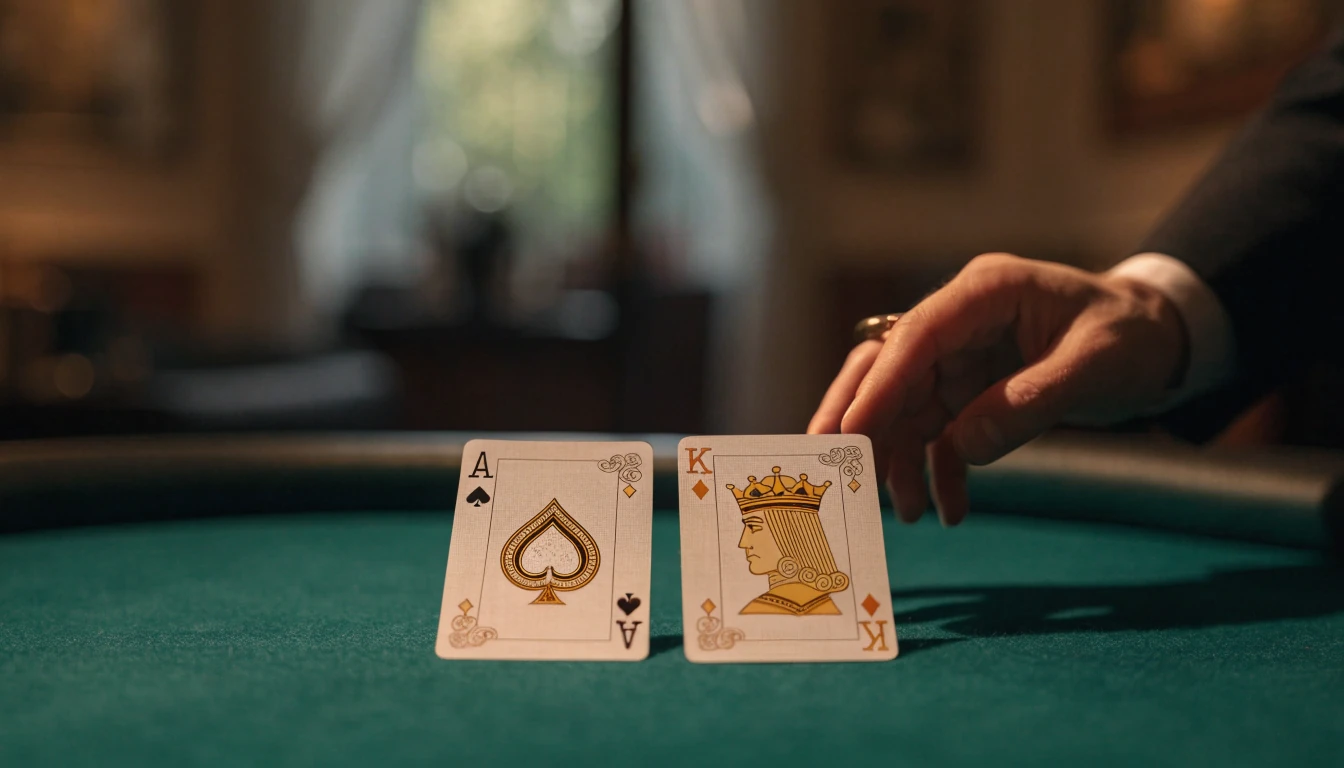
Hi-Lo is a card game built around a comparison: a card is shown, then the player predicts whether the next card will have a higher or lower value. The current card is the reference point. The choice is not about suit, colour or how a card looks; it is about its rank in the game’s value order.
In the described online game, values run from ace at one point through to king at thirteen. That gives each revealed card a numerical value against which the next one can be judged. A queen, for instance, is compared with the value of the current card, not with its suit. The same principle applies whatever the particular cards shown: the call concerns direction on the value scale.
The decision is simple to state but depends on the reference card. A low-valued card leaves more ranks above it than below it; a high-valued card leaves more below than above. Neither observation guarantees what the next reveal will be. The call is a prediction, and the outcome is determined by the card that appears rather than by the apparent strength of the guess.
When choosing a hi-lo casino in the UK for 2026, it helps to check practical details alongside the game itself. This list gives a concise reference point for considering the options.
1. EvoSpin
Payout speed: 1-3 business days EvoSpin has a stated payout speed of 1–3 business days, a practical detail to consider when choosing a hi-lo casino.
2. SpinFormula
Payout speed: 1-3 business days SpinFormula lists a payout speed of 1–3 business days for players weighing up their options.
3. Zombillion
Payout speed: 1-3 business days Zombillion’s stated payout speed is 1–3 business days, offering a clear point of reference for hi-lo players.
4. BeOnBet
Payout speed: 1-3 business days BeOnBet lists payouts as taking 1–3 business days, a useful detail to keep in mind when considering the casino.
5. Jetsetspins
Payout speed: 1-3 business days Jetsetspins has a stated payout speed of 1–3 business days for players comparing practical casino details.
6. Revery Play
Payout speed: 1-3 business days Revery Play lists a payout speed of 1–3 business days, which gives players one concrete detail to consider.
7. NightWin
Payout speed: 1-3 business days NightWin’s stated payout speed is 1–3 business days, a relevant consideration when choosing where to play.
8. Chanze
Payout speed: 1-3 business days Chanze lists payouts as taking 1–3 business days, providing a clear practical detail for prospective players.
9. SlotoSport
Payout speed: 1-3 business days SlotoSport has a stated payout speed of 1–3 business days, giving hi-lo players a useful point of reference.
10. Amunbet
Payout speed: 1-3 business days Amunbet lists a payout speed of 1–3 business days, a practical detail to factor into your choice.
A correct prediction wins according to the game’s rules, with winnings credited to the player’s pot. An incorrect call loses the money placed on that decision. In the described game, a wrong guess also voids winnings already collected during that game. The distinction matters: a successful earlier call does not make those winnings immune to a later mistake. The card comparison determines the result, while the game’s rules determine how that result affects the accumulated amount.
Hi-Lo may be presented in different formats, so the details should not be assumed to be identical across every title. The core comparison remains higher or lower, but the treatment of equal values and the way a game displays its stake or winnings can depend on the particular rules. Some versions permit a same-value choice; that possibility should not be read into a game unless its rules show it. A tie is not automatically a win merely because the chosen direction was close.
The value order also gives the call its boundary conditions. At the lowest value, there is no lower rank in the stated scale; at the highest, there is no higher rank. For cards between those ends, both directions remain possible, although the number of ranks available in each direction differs. That changes the shape of the decision, not the basic rule: compare the next card with the current one and judge whether it falls above or below.
Jackpot Mobile Casinos in the UK: How They Work · Live Blackjack Online Casino UK: How It Works
A useful way to read a Hi-Lo screen is to separate three things that can otherwise blur together: the displayed card, the directional prediction and the settlement of the stake. The card supplies the reference value; the call states the expected direction; the result determines whether the decision wins or loses under that game’s rules. The label “Hi-Lo” describes the comparison, not a promise that every version uses the same deck, payout table or tie treatment. Those are separate terms, and the game rules govern them.
How to Play Hi-Lo: A Decision-by-Decision Walkthrough
A round begins when the game reveals a random card. The card sets the reference point for the first call: the next card must be higher or lower. If neither direction is clear, the player chooses one and places a bet.
Once the call is made, the next card is revealed. A correct prediction advances the round and adds winnings according to the game’s pay table. The player then faces another decision: continue by predicting whether the next card will be higher or lower than the latest card, or stop and collect the winnings accumulated so far.
Stopping is available after the first decision and can be repeated after any later win. The choice is between banking the current amount and putting that opportunity at risk in another call. Continuing does not protect earlier winnings: a wrong guess voids all winnings collected in that game, as well as losing the money placed on the failed call.
Continuing to play does not protect earlier winnings; a wrong guess voids all winnings collected in that game and loses the stake of the failed call.
The sequence therefore has a clear endpoint. A winning call creates the option to collect or continue; a losing call ends the game without the accumulated winnings. Where the game treats a tie as a push, the stake for that call is returned rather than counted as a win. The exact treatment of a tie depends on the game’s rules, so it should be checked before play.
The practical decision is made at each revealed card, not once for the whole round. A player can stop while ahead; continuing keeps the possibility of another payout open, but also leaves the collected total exposed to a later wrong call.
Live Hi-Lo: Reference Cards, Burns and the Continuous Shuffler
In live Hi-Lo, the card exposed from the previous hand provides the reference for the next decision. The new round does not begin with a fresh reference chosen independently: the winning card from the prior hand remains visible and sets the point of comparison. The call is whether the next winning card will be higher or lower than that reference.
That continuity affects how the table should be read. A card displayed from the previous hand is not simply a record of what happened; it is the benchmark for the next Higher or Lower bet. The new card is assessed against it, and a repeat of the same value is not a winning outcome for either of those two choices. Both Higher and Lower lose on a match.
What the reference card does
The reference card anchors the comparison from round to round. If the previous winning card is exposed, its value—not a card from an earlier point in the session—is the basis for the next call. Once the next winning card is revealed, that result becomes the reference for the hand that follows.
Video Slots in the UK: Games, Costs and Offers · Casino Dice Games in the UK: Sites and Play
This is different from treating each round as a standalone draw with a newly selected starting card. The table carries one relevant result forward: the previous hand’s winning card. Its value can therefore change the shape of the next decision, because the question is always relative to the card currently serving as the reference.
The reference card’s role should not be confused with a guarantee about what comes next. It defines the comparison, not the result. A Higher bet succeeds only if the next winning card is higher; a Lower bet succeeds only if it is lower. If the values match, neither direction has been achieved, and the bet loses under this live procedure.
Burns before the next winning card
Before the next winning card is revealed, three cards are burned. These are removed from the sequence before the card used to settle the comparison appears. The order matters: the reference card is already exposed, the burn takes place, and then the next winning card supplies the result.
A burn is not an additional player decision and does not replace the reference card. It is part of the dealing procedure between the reference and the result. The winning card after the burns is the one compared with the exposed reference; the burned cards are not the round’s answer.
This distinction is useful when following a live table. The first card seen after the previous result is not necessarily the card that settles the new Higher or Lower call. The procedure includes the three-card burn before the next winning card is revealed. The comparison still uses the prior winning card, while the outcome comes from the subsequent winning card.
Before the next winning card is revealed, three cards are burned and removed from the sequence.
Continuous shuffling and card return
A continuous shuffler is used, and cards from the previous round are returned to it immediately. This means the live procedure does not preserve a sequence of all previously used cards outside the machine for the duration of the game. The cards from a completed round go back into the shuffler rather than remaining unavailable for later draws.
That point distinguishes this format from a single-deck game in which used cards stay out of the deck. In the live setup described here, immediate return to the continuous shuffler changes the status of cards after a round: a card used earlier is not permanently removed from the available supply. The exposed reference card remains visible for the next comparison, but its visibility does not mean all cards from the preceding hand remain set aside.
A specialist review describes a live version using six 48-card decks, with tens omitted.
Following a live round
The sequence can be read without treating the table as a single-deck draw:
- The previous hand’s winning card remains exposed as the reference.
- The next winning card is revealed and compared with the reference.
- That winning card becomes the reference for the next round.
- Cards from the completed round are returned to the continuous shuffler.
The sequence separates the card that frames the decision from the card that resolves it. It also explains why a live table’s visible reference card and its handling of used cards are not contradictory: one card remains exposed to establish the next comparison, while the previous round’s cards are returned to the shuffler.
For anyone comparing live Hi-Lo tables, these mechanics are more relevant than assumptions carried over from another format. A continuous shuffler and immediate card return do not describe a fixed, shrinking deck. Nor does the exposed reference imply that the next result must differ from it: an equal value is possible as an outcome, and Higher and Lower both lose on that match. The reference governs the call; the burn and shuffler govern how the next winning card is produced.
Choosing an Online Hi-Lo Game by Its Pay Table
A Hi-Lo game’s pay table is the practical basis for comparing its Higher and Lower choices. The relevant question is not which casino uses the most persuasive description, but which side offers the more favourable payout under the displayed terms. For a Higher or Lower bet, the recommended choice is the option that pays more.
That comparison has a narrow scope. A larger listed payout does not, by itself, establish that a game is better in every respect, nor does it predict the result of a particular round. It identifies the more favourable-paying choice between the two available calls. The table should therefore be read as part of the game’s rules, rather than as a promise that a winning call is likely.
For a Higher or Lower bet, the recommended choice is the option that pays more according to the game’s pay table.
Compare the two calls on the same basis
The pay table should make the payout for each direction clear. Higher and Lower need to be compared against one another within the same game, using the same stake and the same stated conditions. If one direction pays more than the other, that is the relevant difference for choosing between those calls.
A table that presents payouts in a less direct format still needs to be translated into a like-for-like comparison. The important point is the amount returned for a successful Higher bet set against the amount returned for a successful Lower bet. Comparing one game’s Higher payout with another game’s Lower payout would not answer the same question unless the underlying conditions also match.
Where the displayed terms do not make the comparison clear, the payout cannot be reliably assessed from the headline alone. A game name, interface or promotional description is not a substitute for the actual table. The choice should remain conditional on the payout information shown for that specific game.
A larger payout is not a guarantee
The higher-paying direction is the recommended selection for a Higher or Lower bet, but this is a payout comparison, not a guarantee of profit. The card outcome still determines whether the call wins. A larger amount for a successful call cannot make an unsuccessful call successful, and it does not remove the risk attached to the stake.
This distinction matters when comparing games described as offering the best Hi-Lo payouts. “Best” has no useful meaning without a defined measure. For this comparison, the measure is limited to the listed Higher and Lower payments. It does not automatically cover other features, the game’s overall return, or the suitability of a particular site.
Highest RTP Slots in the UK: How to Compare Games · Live Casino Lightning Roulette in the UK: How It Works
Nor should a high payout on one side be treated as evidence that every option in that game is equally favourable. The table may show different terms for different calls. Each relevant line needs to be read on its own; a favourable figure in one place does not settle the comparison elsewhere.
Read the table before placing a bet
Before play, the displayed table should be checked for the exact payout attached to the intended call. The game’s wording and its payout information need to be read together, so the meaning of a listed return is not confused with the amount originally staked or with a separate game feature. If the relationship between the call and its payment is unclear, there is no sound basis for treating the game as the better-paying option.
This is also why comparisons between online Hi-Lo games should use the actual pay tables rather than broad claims about a casino or a game category. A casino may offer more than one Hi-Lo format, and the relevant terms belong to the particular game being considered. A comparison based only on the word “Hi-Lo” leaves out the information that determines which direction pays more.
The same standard applies when comparing games across different sites. First identify the Higher and Lower payouts in each game; then compare the relevant side within each game. That process can identify the more favourable-paying call in the available terms. It cannot establish that one site is the best overall, because payout alone does not measure every aspect of a gambling account or game.
Do
- Use the actual pay table
- Compare Higher and Lower payouts
- Select the option that pays more
Don’t
- Rely on promotional wording
- Trust broad casino claims
- Assume a game is better based on a headline
A disciplined choice is therefore simple: use the table, compare Higher with Lower, and select the option that pays more. If the displayed figures do not permit that comparison, the claim that one direction is more favourable is unsupported. The table is the evidence; promotional wording is not.
Live Online Hi-Lo on a Reel: Direction, Ties and Return
A reel-based Hi-Lo game replaces the next-card decision with a directional call on a single reel. The player selects higher or lower, then the reel stops at a number. A stop in the chosen direction wins; a stop in the opposite direction loses. A tie also loses, so matching the reference value is not a neutral result in this format.
That tie rule changes the cost of the decision. A higher call does not merely need to avoid lower values: it must also avoid the value that produces a tie. The same applies to a lower call. The reference point and the reel’s possible stopping positions therefore matter more than the directional label alone. A screen may present the choice simply, but the settlement rule is not simply “right direction wins”: equality is grouped with the losing outcomes.
The available description of this format comes from a specialist review, so it should be treated as a description of that particular game rather than a rule shared by every live Hi-Lo online casino. The reel, its values and the way the reference point is displayed need to be checked in the game itself. A reel-based version is mechanically different from a live card table: the relevant event is where the reel stops, not which physical card is dealt next. The word “live” in a game’s label does not, by itself, establish that it uses a live card procedure.
Chicken Road Game Casinos in the UK: What the Label Means
Parlay or collect
After a win, the described game offers two choices. The player can parlay the original stake together with the winnings into another call, or collect and begin again. Parlaying keeps the result exposed to another outcome: if the next call loses, the stake and winnings placed into that continuation are at risk. Collecting closes that run and separates the amount taken from the next decision.
Those choices are not interchangeable. Parlay is a decision to keep the current result in play; collecting prevents a later call from undoing the amount already taken out of the run. The interface should make clear what is carried forward before another spin begins. If the rules do not explain whether the next call uses the original stake, the accumulated amount, or another defined stake, the displayed choice alone is not enough to calculate the exposure.
A wrong guess voids all winnings collected in that game. That condition makes it important to distinguish a displayed win from money that has actually been collected and a game that has been closed. The collect option is described as starting over, but that should not be read as proof that amounts from an earlier run remain protected if the game’s own rules say a wrong guess cancels winnings across the game. The settlement terms, rather than the button label, determine the final amount.
Voiding Winnings A wrong guess voids all winnings collected in that game, regardless of whether a collect option was previously available.
What the return figure means
A specialist review reports a highest return of 96.23% for the game when betting higher than 4 or lower than 10. This is a figure tied to the particular version and those specified calls; it is not a general return for all reel-based Hi-Lo games, all directional choices or all live Hi-Lo casino sites in the UK. Nor does it describe the result of an individual spin. It is a long-run return calculation, not a promise that a particular sequence will produce that share of the stake back.
The comparison is useful only if the game being considered matches the reviewed rules and betting conditions. A different reel layout, tie treatment or payout structure would change the calculation. The practical check is therefore the pay information and outcome rules shown for the selected game, with special attention to whether a tie loses and what amount is exposed after choosing to parlay. Without those terms, the return percentage cannot settle the value of a particular call.
Online Hi-Lo with a Single Deck: What Changes After Each Draw
A single-deck Hi-Lo game begins with a defined pool of 52 cards. Aces count as the lowest rank, followed by the other cards in ascending order. The key difference from a game that replaces cards after each round is that a drawn card leaves the pool. It cannot appear again during that game.
That changes the information available after every draw. At the start, any card in the deck may be dealt. Once a card has appeared, it is no longer among the possible outcomes. The next prediction is therefore made against a smaller set of remaining cards, not the original full deck. The same removal applies to every subsequent draw.
Plinko Casino UK: Games, Risk and Platform Checks
This is a feature of the described single-deck version, not a rule that can safely be applied to every online Hi-Lo title. The game details available for online formats do not agree: one description identifies a single 52-card deck with used cards removed, while a specialist review describes six 48-card decks and continuous shuffling. Those are materially different card procedures. The single-deck explanation should be used only where the game’s rules confirm that setup; the other description cannot establish a general standard.
A changing card pool
In a single-deck game, the revealed card has two roles. It provides the reference for the next higher-or-lower call, and it is also removed from the cards that could be drawn later. After more cards have been dealt, the remaining pool has fewer possibilities than it had at the start.
The reference card alone does not describe the full state of the deck. Other cards already drawn matter too, because none of them can return. A rank that has appeared is not necessarily exhausted: the deck contains cards of different suits, and only the specific card drawn is ruled out. But the exact card cannot recur within the same game.
Aces being low fixes their position in the comparison. They do not switch between high and low according to the card beside them. This keeps the ordering consistent as the available pool changes. It also means that an ace is at the bottom of the sequence rather than a flexible endpoint.
In a single-deck game, Aces are always treated as the lowest rank and do not switch positions.
Why the deck rule matters
A prediction in a single-deck Hi-Lo online casino game is not based on repeated draws from an unchanged set. Each card dealt alters what remains available. That does not, by itself, determine whether a particular call will win: the next card is still unknown. It does mean that a calculation based on every card remaining possible throughout play would describe the wrong setup.
The distinction is practical when comparing rules pages. A statement that cards are not returned implies a finite pool that contracts during play. Continuous shuffling describes a different process, in which cards from a prior round may be returned to the shuffle. Those mechanics should not be blended into one account merely because both games use cards and higher-or-lower choices.
For a single-deck version, the working rule is straightforward: start with 52 cards, treat aces as low, and remove each card after it is drawn. The available possibilities change from draw to draw, and no card can be dealt twice in the same game.
Hi-Lo Strategy: Basic Play, Counting and the Return Figures
For Draw Hi-Lo, the published return figures distinguish a basic strategy from a card-counting approach. A specialist review reports a return of 96.07% for basic play and 100.36% when using card counting. These are calculations attributed to that review, not guaranteed results or a general return rate for every Hi-Lo casino game.
The difference is 4.29 percentage points. On the figures given, basic play returns less than the amount staked over the calculation, while the counting result exceeds it. That comparison describes the model’s long-run arithmetic; it does not mean a player will finish a session ahead. Individual outcomes remain subject to the cards drawn, and a favourable theoretical return cannot remove short-term losses.
Online Bingo in the UK: Formats, Tickets and Slots
Basic play relies on the information available at the current decision without maintaining a count of cards already removed. The reported 96.07% figure belongs to the specified Draw Hi-Lo calculation. It should not be carried across to live card games, reel-based versions or a different pay table: the format and its rules affect the underlying calculation.
Card counting uses the changing composition of the deck. In Draw Hi-Lo, used cards are not put back, so the cards already seen contain information about what remains. A count can therefore inform a later decision rather than treating every draw as if it came from an untouched deck. The reported 100.36% return is tied to the counting strategy described by the specialist review; it should not be read as a universal feature of counting or of online Hi-Lo.
The apparent advantage over 100% needs careful handling. It is a calculated return for a particular strategy and game model, not a promise that the game pays more than the stake in practice. The result depends on the assumptions behind the calculation, including the rules and decisions represented. Without those details, the percentage cannot be independently transferred to another version.
The useful comparison is narrow: 96.07% for the stated basic strategy versus 100.36% for the stated card-counting strategy in Draw Hi-Lo. Neither number establishes the return available at a different table or under different rules. Counting changes how card information is used; it does not change the pay table, restore cards to the deck or guarantee a winning run.
Basic Strategy
Relies on information available at the current decision without maintaining a count of removed cards. Reported return: 96.07%.
Card Counting
Uses the changing composition of the deck to inform decisions. Reported return: 100.36%.
Hi-Lo Card Values and the Pot
In a single-deck Hi-Lo game, card rank determines whether a call is higher or lower: an ace counts as one, followed by the numbered cards, with a king valued at thirteen. The pot records the result of each decision. A correct call adds the winnings to it; a wrong call loses the money placed on that decision and voids winnings accumulated in the game.
That distinction matters when reading the pot display. It is not necessarily a separate balance available for collection after every draw: it reflects the running result of the current game. A losing call does not merely leave the player with a smaller amount to collect. It removes the stake and cancels the winnings built up during that game. The displayed total is therefore conditional on continuing to win, not a guaranteed return.
Card accounting also depends on which version is being described. Some descriptions specify a single 52-card deck, with used cards not returned, so the same card cannot appear twice in one game. Other descriptions specify six 48-card decks, with continuous shuffling. Those are materially different card pools, and the descriptions conflict; they should not be combined into one set of rules. The pot calculation should be read alongside the rules shown for the particular game.
High-Volatility Slots in the UK: How Payouts Work
With a single deck, the card history changes what remains available for later draws, but it does not change the basic pot entry: a correct guess adds winnings, while an incorrect guess ends the accumulated result for that game. The pay table determines the amount credited for a correct call, so the pot cannot be calculated from card rank alone. No fixed payout can be inferred without that table.
A tie may be treated as a push in the described Draw Hi-Lo game, meaning the decision does not produce a win or a loss. That is separate from a correct higher-or-lower call and should be checked against the displayed rules. The useful accounting test is simple: identify the amount placed on the decision, the credit for a correct result, and what happens to the accumulated pot after a loss.
Checking a Hi-Lo Casino Site’s UK Licence and Controls
A Hi-Lo game’s rules do not establish whether the site offering it is authorised to serve British customers. That is a separate check: the operator must hold the relevant UK Gambling Commission operating licence for remote gambling. The Commission regulates commercial gambling in Great Britain, including online casinos, and its remit applies to remote services offered to consumers there even when the operator’s key equipment is located elsewhere.
The distinction between a business licence and an individual licence matters. The Commission issues operating licences to businesses and personal licences to individuals working in relevant roles. A named employee’s personal licence does not replace the operating licence required by the business providing the gambling service. Likewise, a licence held by an overseas authority is not a substitute for the relevant UKGC authorisation for service to Great Britain.
Verify Operator Licence
- Check licence number against the UKGC public register
- Ensure the legal business name matches the site operator
- Confirm the operator holds a UK operating licence for remote gambling
Verify the operator, not just the branding
Before depositing, check the licence number against the UK Gambling Commission’s public register. The register is the point of comparison between the legal business named there and the operator identified on the casino site. A familiar brand name alone is not enough: the register entry and the site’s legal operator should correspond. If the licence number cannot be verified, or the business details do not match, the authorisation has not been established by the check.
The UKGC is the sole regulator for commercial gambling in Great Britain. An offshore licence may indicate oversight in another jurisdiction, but it does not place a site within the UKGC regulatory system. For a Hi-Lo casino site serving British customers, the relevant question is whether the business holds the UK operating licence required for that activity, not whether it displays some licence badge.
The Gambling Act 2005 governs gambling in England, Wales and Scotland; it does not cover Northern Ireland. References to the Commission’s remote-gambling remit here concern Great Britain, where operators selling remote gambling to consumers must hold the appropriate licence regardless of equipment location.
Best RTP Casino Slots in the UK: What RTP Means
What regulation means for account controls
Licensing is not a guarantee about a particular game’s payout or a substitute for checking the game rules. It establishes that the operator is within the applicable regulatory system. UKGC-licensed casinos must provide responsible-gambling tools, including self-exclusion, and an internal complaints process with access to an approved Alternative Dispute Resolution service. These are practical controls: a complaint has a defined route, and self-exclusion is an account-level safeguard rather than a statement about game odds.
Licensed operators are also required to contribute to the Research, Education and Treatment levy. That obligation sits with the operator; it does not change the mechanics of a Hi-Lo round. A site’s claims about its game and its regulatory status should therefore be assessed separately. The licence check answers who is authorised to offer the service in Great Britain. The game rules answer how a call is settled. Neither answer can stand in for the other.
Classic Slots Online UK: How Free Demos Work
Before Depositing: Limits, Age Checks and Payment Restrictions
A Hi-Lo account is subject to account checks before money can be used. In Great Britain, an operator must verify a customer’s age before allowing a deposit. Online gambling is legal for adults aged 18 and over when the operator holds the required UK Gambling Commission licence. Age verification is therefore a condition of access, not a check that can be left until a withdrawal.
Financial limits also come before play. Remote operators must prompt new customers to set a financial limit before their first deposit and make account-level limit controls accessible. The prompt is part of the account process; the limit controls remain relevant after setup. These measures apply to the gambling account, rather than changing the rules of a Hi-Lo round.
Payment restrictions affect how funds can reach that account. UK-licensed casinos cannot accept credit-card payments for gambling. The restriction also covers credit-card funding routed through a money service business, so using an intermediary does not make the source acceptable. Wallet payments are also barred where the wallet permits credit-card funds to be used for gambling. A payment method’s name alone is not enough to establish that it is permitted; the funding source and route matter.
Debit-card payments are not prohibited by these credit-card rules, but that does not mean every payment method is available at every hi-lo casino site. Payment options depend on the operator and account. The relevant distinction is whether credit is funding gambling, directly or through an allowed wallet route.
These checks are separate from the game’s stake and payout terms. In particular, the online slot stake limits do not set a stake limit for Hi-Lo: they apply to online slots. Before depositing, the account conditions to establish are whether age verification is complete, whether a financial limit has been set, and whether the intended payment route avoids credit-card funding.
Material created by the team Jettbet