The guide explains how licensing, access claims, bonus conditions and payment checks shape the risks of playing with overseas operators.
What “international casino” means in the UK
“International casino” is a commercial description, not a licence category. In the UK market, the relevant distinction is whether an online gambling operator accepts British customers while holding a licence from the UK Gambling Commission (UKGC). An operator that accepts customers in Britain without that licence is a foreign casino in this context, even if its website uses a different label or presents itself as a global brand.
The word “international” can describe an operator’s reach, ownership or intended audience, but none of those details establishes permission to serve the British market. A company may be based overseas and still hold the licence required to operate here. Conversely, an overseas address or an international-sounding brand does not make an operator authorised in the UK. The licence status, rather than the name or location, is the meaningful dividing line.
That distinction matters because the operator’s position and the player’s position are not the same. Under the rules governing the British gambling market, an unlicensed operator cannot lawfully provide gambling facilities to UK customers or advertise its services in the UK. Holding a licence from another jurisdiction does not replace the UKGC licence needed to serve this market. An offshore casino is therefore outside UKGC regulation; a foreign licence does not give it UKGC oversight.
For an individual, however, the legal position is different. UK law does not make it a criminal offence for a resident to place a bet with a foreign casino, and there is no criminal penalty for the player simply for doing so. That does not make the operator’s activity lawful in Britain. The operator’s obligation to obtain the appropriate licence remains separate from the customer’s liability, which is not created merely by playing.
Casinos & Safety: UK Licensing and Player Checks
This is the point at which casual descriptions can mislead. “Legal for a player” does not mean “legally authorised to operate in the UK”. Nor does the word “international” indicate that a casino has passed a UK licensing test. The two questions concern different parties: whether the operator may offer its service to the British market, and whether the player commits an offence by using it. The answer to the first depends on the operator’s UKGC status; the answer to the second is that the player is not criminally liable simply for betting there.
A site may state that it is licensed abroad, but that statement answers only where it claims to be regulated. It does not establish that it holds permission from the UKGC or that UKGC rules apply. Offshore operators are not regulated by the UKGC and do not provide UKGC-mandated affordability checks. A foreign licence and a UK licence are not interchangeable credentials.
“International casino” can also appear in descriptions of sites intended for customers in several countries. That broad audience does not settle whether the site may serve people in Britain. The relevant UK question is narrower: does the operator accept British customers, and does it hold the UKGC licence required to provide gambling facilities here? If it accepts those customers without that licence, it fits the definition of a foreign casino used in the UK market.
The label itself offers no protection or assurance. It does not tell customers which regulator has authority, whether the operator is authorised to serve Britain, or what rules govern its conduct. Those matters must be distinguished from the player’s criminal liability: the absence of a criminal penalty for the player does not confer UK authorisation on the casino. In practical terms, “international” describes a brand’s reach; the UKGC licence determines whether it is licensed to operate in this market.
Playing online across borders: the legal and regulatory boundary
A British player does not commit an offence simply by placing a bet with a casino licensed outside the UK. UK law does not prohibit an individual from gambling with an overseas operator. That point concerns the player’s conduct; it does not give the operator permission to serve customers in Britain.
Attention: While UK law does not make it a criminal offence for a resident to bet with a foreign casino, this does not mean the operator is lawfully authorised to provide gambling facilities in the UK.
The distinction is between where a casino is licensed and where it offers gambling. An offshore licence is issued outside the UK system. It does not make the operator subject to the UK Gambling Commission (UKGC), and it does not replace the UK licence required to provide gambling facilities to customers in Great Britain. For online gambling offered in England, Scotland and Wales, the operator must hold the relevant UKGC licence. Without it, offering those services is unlawful, even if the company is authorised elsewhere.
This is the central boundary for international online casinos and UK players: the individual’s ability to place a bet is not the same as the operator’s right to offer one. A casino may have a licence in another jurisdiction and still lack authority to serve the British market. Conversely, the fact that a British player is not prohibited from using an overseas site does not turn that site into a UK-regulated casino.
What the distinction does—and does not—mean
The legal position is often compressed into a single question: whether a British player can use an international casino online. That wording obscures two separate issues. The player is not barred by UK law merely for betting with an overseas operator. The operator, however, must be licensed by the UKGC to provide gambling services to customers in Great Britain.
An overseas licence therefore describes the operator’s status under the rules of the jurisdiction that issued it. It does not establish that the UKGC has approved the business, supervises its conduct or can apply its regulatory requirements to it. Offshore casinos sit outside the UKGC regulatory system. Their licence should not be read as equivalent to UK authorisation.
Mobile Casinos That Accept Phone Credit in the UK
This also affects what oversight can be expected. A UKGC licence places an operator within the British regulatory framework. An offshore operator is not subject to UKGC regulation or UKGC enforcement simply because it accepts a customer who lives in Britain. The regulatory boundary does not move with the customer.
The difference matters because legality is not a single status shared by both sides of a transaction. The player’s position and the operator’s position must be assessed separately. A British resident may place a bet without breaking a law that prohibits the player from doing so, while the operator may still be acting unlawfully by offering gambling facilities in England, Scotland or Wales without a UKGC licence. Neither point cancels the other.
Safeguards outside the UKGC system
Offshore casinos do not provide the affordability checks mandated for UKGC-licensed operators. This is not a minor difference in presentation: it means that the UKGC’s required process for assessing affordability does not apply to an operator outside its remit. A player should not infer that the checks are being carried out just because an offshore site accepts British customers or displays a licence from another jurisdiction.
Nor does the existence of a foreign licence establish that the operator offers the same regulatory protections as a UKGC-licensed casino. The licence belongs to another system, with its own authority and rules. It is not evidence of UKGC oversight, and it does not give the UK regulator control over the operator.
Offshore casinos are not regulated by the UKGC and do not provide the affordability checks mandated for operators within the British regulatory system.
That is why the legal question should not be reduced to whether a site can be reached or whether it has a licence somewhere. Access is not authorisation. A site’s willingness to accept a British customer does not show that it may lawfully offer services in Great Britain, and it does not make UK regulatory safeguards applicable.
For a British player, the narrow legal point is clear: there is no UK prohibition on an individual placing bets with an overseas operator. For the operator, the boundary is different: providing gambling services to customers in England, Scotland and Wales requires a UKGC licence. An offshore licence does not satisfy that requirement, and an offshore casino remains outside UKGC regulation.
The commercial interests behind some international casino brands
A casino brand is the visible part of a business arrangement. Behind it may sit an operator, a licence holder and commercial partners whose income depends on activity at the site. For international casino sites associated with the UK market, those connections matter because they can show who benefits financially when customers gamble—and, in the case of the Santeda–SIS arrangement, when bets lose.
Under the contract between Santeda and SIS, SIS was paid a percentage of revenue generated by losing bets placed through Santeda’s brands. That is a different basis for payment from a fixed fee: the amount due to SIS was linked to revenue from losses, rather than being independent of betting outcomes. The arrangement therefore connected SIS’s commercial return to one particular result of customers’ play.
That link is relevant when assessing the business relationship, but it does not, by itself, establish how either company marketed the casinos, set their games or dealt with individual customers. Nor does it show that every international casino site uses the same commercial model. The useful distinction is narrower: a payment tied to losing-bet revenue creates a financial interest in that revenue stream. It is not the same as a neutral service charge that remains unchanged regardless of the outcome of bets.
USA Casinos for UK Players: Regulation and Risks
The distinction also matters because “revenue” can sound abstract in a corporate description. Here, the stated basis of the payment was not simply the number of visitors, registrations or deposits. It was a share of revenue associated with losing bets. That makes the economic connection more specific: customer losses were part of the measure on which SIS’s payment depended. Without the contract’s full terms, the size of the share and the way revenue was calculated should not be assumed.
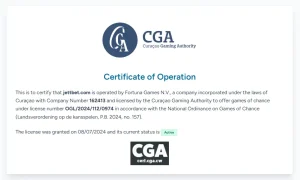
Santeda’s licensing position adds a separate point. Its licence from Curaçao does not authorise it to run gambling operations in the UK or the United States. A licence issued elsewhere is not a substitute for permission from the UK Gambling Commission to serve the British market. Santeda’s commercial relationship with SIS and its authority to operate in a particular country are therefore separate questions: a revenue-sharing agreement cannot expand the territorial scope of a gambling licence.
That separation is important when a brand is presented as “international”. The word may describe a business’s reach or its customers, but it does not identify which regulator has authorised a particular service. Offshore casinos are outside UKGC regulation, and they do not provide the UKGC-mandated affordability checks required of operators within that system. Those differences remain relevant regardless of who supplies a commercial service to the operator or receives a share of its revenue.
For a business relationship, the central issue is the incentive created by its payment structure. A partner paid from losses has a direct financial connection to that category of revenue. That is a potential conflict of interest in the ordinary commercial sense: the partner’s return is linked to an outcome that costs customers money. It does not prove that the partner controlled gambling decisions or encouraged losses. It does mean the relationship should not be described as financially detached from customer outcomes.
The same care applies to broad claims about “the casino” as though one brand represented a single company with one set of interests. A customer-facing name can sit within a wider network of contractual relationships. In the Santeda case, the documented link is specific: SIS received a percentage of revenue from losing bets made through Santeda brands. It is more informative to state that connection plainly than to infer responsibilities or conduct not established by the arrangement.
Gibraltar casino licence in the UK: what to check
For anyone comparing international casino sites for UK players, corporate connections are consequently a separate consideration from the site’s games, payment methods or promotional terms. A named partner may have a financial role without being the operator, and a partnership does not itself demonstrate that a casino is authorised to serve Britain. The Santeda–SIS arrangement shows why the wording of a commercial relationship matters: the payment was linked to losses, while Santeda’s Curaçao licence did not grant UK operating authority. Those are two distinct facts, with distinct implications.
Bonus terms: the cash required before a payout
A welcome offer is not the same as withdrawable cash. Its headline value matters less than the condition attached to it: the amount that must be wagered before bonus funds can be converted into a balance available for cash-out.
A specialist review describes deposit matches, free-spin packages, no-deposit bonuses and cashback as common offer types at foreign casinos serving UK players. The labels do not reveal the cost of qualifying. A no-deposit offer removes the initial deposit condition, but it does not, by itself, establish that winnings can be withdrawn immediately. The qualifying terms still determine what must happen before any bonus-derived balance is paid.
The arithmetic is direct when the wagering requirement is stated as a multiple of the bonus. A specialist review gives the example of a £20 bonus with a 35x requirement: qualifying bets must total £700 before the bonus can be cashed out. The calculation is £20 multiplied by 35. That is turnover, not a £700 loss; the eventual result depends on the bets placed. But turnover is still the condition, and it should not be confused with the value of the offer.
The same calculation applies to a larger match. A 100% match bonus of £100 with a 35x requirement entails £3,500 in bets before the bonus funds become withdrawable: £100 multiplied by 35. The matching percentage describes how the bonus relates to a deposit; it does not reduce the wagering requirement. A larger headline can therefore produce a larger qualifying-bet total.
Bonus Wagering Calculation
Step 1: Identify the bonus amount
Take the bonus value, for example, £20.
Step 2: Identify the wagering multiple
Determine the requirement, such as 35x.
Step 3: Calculate the total turnover
Multiply the bonus by the requirement (£20 × 35) to find the total qualifying bets needed (£700) before the bonus can be cashed out.
Before valuing any international casino bonus, the relevant terms are the eligible bonus amount, the wagering multiple and the definition of qualifying bets. If the requirement is tied to the bonus rather than the combined deposit and bonus, that distinction changes the calculation. The offer’s wording should specify which sum is multiplied. Any restrictions on eligible games or on when the offer expires can also affect whether the stated turnover can be completed under the actual terms; the headline alone does not answer those questions.
A specialist review also characterises foreign welcome packages as larger because offshore operators are not bound by UKGC restrictions on bonus terms, wagering requirements and promotional language. That is a description of the offer environment, not evidence that a larger package has greater cash value. Without the full conditions, the apparent size cannot be compared on a like-for-like basis.
The regulatory distinction matters to the calculation’s reliability as well as its presentation. Offshore casinos are not regulated by the UK Gambling Commission, and they do not offer UKGC-mandated affordability checks. An advertised bonus does not provide UKGC protection, and a generous match does not change the operator’s regulatory status.
For a no-deposit bonus, the useful figure is not simply the amount credited. It is the qualifying turnover attached to that amount and the point at which any resulting funds can be withdrawn. Where those terms are unclear, the offer has no dependable cash value to calculate.
Access for UK players and the limits of “accepting” them
A site that loads from a British address is not necessarily authorised to serve customers in Great Britain. “Accepting UK players” can describe what happens at the registration screen, not the operator’s legal status or the protection attached to the account. Offshore casinos are not regulated by the UK Gambling Commission, and they do not provide the UKGC-mandated affordability checks that apply within its regulatory system.
Online casinos with an MGA licence in the UK
Access rules can also differ from what a site’s pages imply. Gambling.com reports that some casinos licensed outside the UK are meant to block British visitors, while many do not enforce that restriction; the report also says users can get around a block with a basic VPN. This is a reported account of changing practice, not a reliable test of whether any particular site permits British customers.
A registration form that accepts a UK address, or an app that can be installed and opened, does not establish that an operator holds a UKGC licence. Nor does a welcome banner aimed at British visitors. The same applies to claims about free spins or free spins without a deposit: promotional wording describes an offer, not the operator’s authorisation to provide gambling facilities in Britain. Access and permission are separate questions.
The distinction matters because a site can appear usable while remaining outside the UK regulatory framework. A working account, successful deposit flow or available casino app is evidence only of technical access at that moment. It does not establish that the operator is entitled to serve the British market, or that UKGC protections apply to the account. A basic VPN can make the location signal less reliable still; it does not change the operator’s licence or bring the service under UKGC oversight.
For any international online casino presented as accepting UK players, the practical point is therefore narrow: the ability to register or play should not be treated as confirmation of UK authorisation. Offshore licensing is not UK licensing, and access controls may be inconsistently applied. That gap between a site’s apparent availability and its regulatory position is the substance of “acceptance”; the word alone settles neither.
Crypto deposits and the value of a fast withdrawal
Crypto can be one of the payment choices at an international casino. Its appeal is often described in terms of withdrawal speed, but speed and value are separate parts of the transaction. A crypto balance may be transferred quickly while its value in pounds changes before it is converted or spent.
Highest-Paying Online Casinos in the UK: RTP Explained
A specialist review has reported that crypto withdrawals at foreign casinos can clear in under an hour, faster than fiat methods. That is a reported outcome, not a dependable timetable for every operator or transaction. Processing depends on the casino’s own handling, and the time needed for a transfer does not remove the possibility that the asset’s market price will move.
The financial comparison therefore has two components: how long a withdrawal takes to clear, and what the crypto received is worth when it is exchanged. If the value falls between receipt and conversion, a fast payment can still produce a smaller sterling return. If it rises, the reverse may occur. Neither outcome is guaranteed by the withdrawal speed.
The same distinction applies at deposit. Selecting crypto as a deposit method determines how funds are sent; it does not fix their value in pounds. Any comparison with a sterling balance needs to account for the exchange value at the relevant point, rather than treating the crypto amount as a stable cash equivalent.
A quick transfer is an operational feature, not a measure of financial certainty. The terms should be read for the payment method accepted and the operator’s handling of withdrawals, while the value risk remains with the changing price of the asset.
Foreign casinos are not regulated by the UK Gambling Commission, and they do not provide the affordability checks mandated for UKGC-licensed operators. A crypto payment option does not change either point or provide equivalent UK regulatory protection.
Non-GamStop casinos: access without the UK exclusion safeguard
GamStop applies across UK Gambling Commission-licensed operators. Once a player has registered a self-exclusion, that block covers every UK-licensed gambling site. A casino operating outside the Commission’s remit is not part of the scheme, so the exclusion does not automatically prevent access there.
That gap matters because self-exclusion is intended to create distance from gambling, not merely to remove a particular account. A specialist review has reported that someone who has self-excluded may be able to register with a foreign casino and deposit within minutes. That describes a reported possibility, not a safeguard or a reliable indication of how every operator handles registration. The practical point is that GamStop cannot enforce the block beyond the UK-licensed market.
Self-Exclusion Risk
Using a non-GamStop casino can reopen access to gambling for those who have self-excluded, as offshore operators are not part of the UK exclusion scheme.
Non-GamStop casinos are offshore and are not regulated by the UK Gambling Commission. They also do not provide the affordability checks mandated by the UKGC. A claim about encryption or account security addresses protection of data and financial information; it does not restore the exclusion mechanism or the UKGC’s regulatory oversight. Security technology and gambling safeguards are separate matters.
Some platform descriptions claim that casinos outside GamStop use advanced encryption. Specialist reviews also describe some as holding licences from other authorities. Neither claim establishes UKGC regulation or equivalent protection. A foreign licence does not make an operator part of GamStop, and encryption cannot prevent a person who has self-excluded from opening an account.
For someone using GamStop, seeking an international non-GamStop casino is therefore not a neutral change of venue. It can reopen access that the exclusion was set up to close, while leaving the player outside both the scheme and UKGC-mandated affordability checks. The relevant distinction is not whether a site offers games or advertises security features; it is whether the exclusion and protections relied upon apply to that operator.
Live roulette: what can and cannot be verified
A search for live roulette at an international casino is asking about a specific product, not simply whether a site calls itself a casino. The distinction matters: a general casino label does not establish that live roulette is available, or show what version of the game is offered.
A useful review separates the site’s general status from its roulette catalogue. The relevant evidence for a particular table would be its listing in the casino’s own games area, with the game identified as live roulette. A broad claim about casino games is not equivalent to confirmation of a live table. Nor does the word “international” indicate the game provider, table rules or available betting options.
Those details should not be inferred from the operator’s branding or from another casino’s catalogue. A review that names a roulette table or describes its rules needs to be tied to that specific offering. Without that connection, claims about a particular live game are not a dependable basis for comparison. This is a narrow standard, but it prevents general casino coverage from being mistaken for a verified roulette review.
Licensing is a separate question. Offshore casinos operate under licences outside the UK and are not regulated by the UK Gambling Commission. A licence issued elsewhere does not make an operator UKGC-regulated, and it does not establish that a particular live roulette table is available to British customers. Game information and regulatory status need to be assessed independently.
There is also a difference between describing a product and endorsing it. An international live roulette casino may promote a live-dealer experience, but promotional wording alone does not confirm the table’s rules or the operator’s regulatory position. Offshore operators do not provide the affordability checks mandated by the UKGC. That absence is relevant to the overall risk assessment, even where the interest is limited to roulette.
The practical conclusion is limited: live roulette is a product-specific claim, while “international casino” is a broad label. Neither the label nor a general casino review, by itself, verifies a live roulette offering or supplies UKGC protection.
Comparing international casinos for UK players in 2026
Choosing an international casino as a UK player calls for attention to practical details, including how quickly withdrawals are paid. Use these verdicts as a starting point when considering the options.
1. EvoSpin
Payout speed: 1-3 business days EvoSpin lists a payout speed of 1–3 business days, a useful detail to consider when reviewing its cash-out process.
2. SpinFormula
Payout speed: 1-3 business days SpinFormula lists a payout speed of 1–3 business days. This gives UK players a stated timeframe to factor into their assessment.
3. Zombillion
Payout speed: 1-3 business days Zombillion lists a payout speed of 1–3 business days, offering one concrete detail about its payment process.
4. BeOnBet
Payout speed: 1-3 business days BeOnBet lists a payout speed of 1–3 business days. UK players can use this stated timeframe when considering withdrawals.
5. Jetsetspins
Payout speed: 1-3 business days Jetsetspins lists a payout speed of 1–3 business days, a relevant detail for players weighing how soon they may receive a payout.
6. Revery Play
Payout speed: 1-3 business days Revery Play lists a payout speed of 1–3 business days. This provides a clear stated timeframe to consider for withdrawals.
7. NightWin
Payout speed: 1-3 business days NightWin lists a payout speed of 1–3 business days, giving players a practical point to bear in mind when reviewing its payment details.
8. Chanze
Payout speed: 1-3 business days Chanze lists a payout speed of 1–3 business days. This stated timeframe may help UK players assess whether its payout timing suits them.
9. SlotoSport
Payout speed: 1-3 business days SlotoSport lists a payout speed of 1–3 business days, one specific factor to consider when reviewing its withdrawal process.
10. Amunbet
Payout speed: 1-3 business days Amunbet lists a payout speed of 1–3 business days. UK players can take this timeframe into account when considering the operator.
Comparing casinos based outside the UK involves two separate questions: whether a British player may place a bet there, and what regulatory framework governs the operator. The player’s position is straightforward: UK law does not prohibit an individual from betting with an overseas casino, and there is no criminal penalty for doing so.
That does not make an offshore operator a UK-regulated alternative. Casinos operating outside the UK Gambling Commission’s system are not regulated by the UKGC. The absence of a player offence and the absence of UK oversight are different facts; one does not cancel out the other.
A comparison therefore cannot be reduced to a league table of brands or features. An operator’s overseas licence does not amount to UKGC authorisation, and offshore sites do not provide UKGC-mandated affordability checks. They should not be treated as carrying the same protections or accountability as operators licensed for the British market.
The practical point is to keep the legal status visible while assessing any other information. A favourable-looking offer or a polished presentation does not alter the operator’s regulatory position. Nor does the fact that a British player can place a bet establish that the site is authorised to serve customers in Great Britain.
The phrase “best international casinos for UK players” can imply that a ranking settles the important question. It does not. A ranking may compare commercial features, but it cannot turn an overseas licence into a UKGC licence or supply safeguards that sit outside the operator’s framework. For a British player, legality of participation and regulatory protection belong in separate columns.
In 2026, that distinction remains the useful starting point for comparing overseas casinos: the player is not committing a criminal offence by betting with one, while the operator remains outside UKGC regulation. Any assessment that merges those two positions gives an incomplete account of the arrangement.
Real-money play: withdrawal timing, checks and tax
A balance becomes usable money only after the operator approves a withdrawal and the payment method completes its part. Those are separate stages. The casino may have a pending period or request documents before releasing funds; procedures and withdrawal limits vary by operator. A displayed processing time therefore does not necessarily describe the full wait from submitting a request to receiving the money.
No-ID-Verification Casino Withdrawals in the UK
For UK Gambling Commission-licensed operators, identity must be verified before a withdrawal is processed. Offshore casinos are not regulated by the UKGC, so that requirement does not apply to them in the same way. They also do not provide UKGC-mandated affordability checks. Their verification rules and handling of pending withdrawals depend on the operator, leaving fewer consistent standards across sites.
Payment method affects the timing too. Skrill and Neteller withdrawals are reported as clearing within 24 hours at most foreign casinos, with many processed in under 12 hours. Bank transfers take longer: a specialist review of foreign casino payments describes them as often taking five to seven business days, with some operators adding a processing delay before the bank transfer begins. The difference between an operator’s approval time and the banking timeline matters; both can contribute to the total wait.
These figures are not a promise for an individual transaction. The cashier terms should be read for the chosen method, including any pending period, document requirements and withdrawal cap. A method that is fast after approval does not remove an operator-side delay.
Tax treatment is separate from licensing and payment speed. Gambling winnings are not subject to income tax in the UK, whether they come from a UKGC-licensed operator or an overseas casino. That does not make an offshore site equivalent to a regulated UK operator: it remains outside UKGC oversight, and a British player may have less recourse if a payout is withheld.
Is playing at an international casino legal for UK residents?
Yes, a UK resident does not commit an offence simply by betting with an overseas casino. However, an operator needs a UK Gambling Commission licence to offer gambling to customers in Great Britain; a foreign licence does not replace it.
What should players check to assess whether an international casino is safe?
Check whether the operator holds a UK Gambling Commission licence if it accepts customers in Great Britain. An offshore licence does not put the casino under UKGC oversight, and claims of encryption or a foreign licence do not establish UK authorisation.
What does a wagering requirement actually mean in practice?
It is the amount you must stake on qualifying bets before bonus funds can be withdrawn. For example, a 35x requirement on a £20 bonus means £700 in qualifying bets; on a £100 bonus, it means £3,500.
What should I do if a casino refuses to pay my winnings?
With an unlicensed site, customers who have been refused winnings may have no legal recourse. Check the operator’s licensing status before depositing, as an offshore licence does not provide UKGC oversight.
How long do withdrawals take at the listed operators?
Timing depends on the payment method and the operator’s processing procedures. E-wallets often clear within 24 hours, and some foreign casinos process them in under 12 hours; bank transfers often take five to seven business days, while crypto withdrawals can clear in under an hour.
What happens if I have a dispute with a foreign casino?
A foreign casino is outside UKGC regulation, and an offshore licence does not give the UKGC oversight of the operator. Customers of unlicensed sites have in some cases been refused winnings with no legal recourse.
Are gambling winnings subject to income tax in the United Kingdom?
No. Gambling winnings are not subject to UK income tax, whether the operator is UKGC-licensed or not.
Are bonuses at foreign casinos actually better than at UKGC-licensed sites?
Foreign casinos often advertise larger welcome packages because they are not bound by UKGC restrictions on bonus terms, wagering requirements and promotional language. Check the wagering requirement: for example, a 35x requirement on a £100 bonus means £3,500 in qualifying bets before the bonus can become withdrawable.
Material created by the team Jettbet