

A cashier threshold is only part of the picture: payment rules, bonus qualification and stake limits shape small-balance play.
Where a £3 Deposit Sits Among UK Casino Minimums
A £3 minimum deposit sits between the lowest reported entry point and the higher figures associated with direct banking. It is neither the smallest amount a UK casino may accept nor a reliable guide to the amount needed for a particular session. The cashier minimum answers a narrow question: what deposit the operator will accept under the conditions shown there. It does not, by itself, describe the cost of playing or how long a balance may last.
Some UK casinos accept deposits from £1, making £3 higher than the lowest available tier. At the other end, a specialist review describes £10 as the typical minimum among UK casinos accepting direct banking, while noting operators that set that threshold at £5 or £20. That comparison places £3 below the figure described for direct banking, but it does not establish that every casino accepting £3 also accepts direct banking at the same level. A cashier’s stated minimum applies to the particular account and conditions displayed, not to the market as a whole.
A low minimum deposit can make it easier to try a casino, but check the terms that apply to your account before depositing. This list gives a concise detail to consider when reviewing the options.
1. EvoSpin
Payout speed: 1-3 business days EvoSpin lists a payout speed of 1–3 business days.
2. SpinFormula
Payout speed: 1-3 business days SpinFormula lists a payout speed of 1–3 business days.
3. Zombillion
Payout speed: 1-3 business days Zombillion lists a payout speed of 1–3 business days.
4. BeOnBet
Payout speed: 1-3 business days BeOnBet lists a payout speed of 1–3 business days.
5. Jetsetspins
Payout speed: 1-3 business days Jetsetspins lists a payout speed of 1–3 business days.
6. Revery Play
Payout speed: 1-3 business days Revery Play lists a payout speed of 1–3 business days.
7. NightWin
Payout speed: 1-3 business days NightWin lists a payout speed of 1–3 business days.
8. Chanze
Payout speed: 1-3 business days Chanze lists a payout speed of 1–3 business days.
9. SlotoSport
Payout speed: 1-3 business days SlotoSport lists a payout speed of 1–3 business days.
10. Amunbet
Payout speed: 1-3 business days Amunbet lists a payout speed of 1–3 business days.
The practical distinction is between a threshold and a budget. A £3 minimum means that an eligible deposit at that level may be accepted; it does not mean that £3 is the recommended amount, that every game can be played with it, or that it will support a session of any particular length. Those are separate questions. A minimum is an entry condition, not a forecast of what happens after the money reaches the balance.
That distinction matters when comparing deposit tiers. A £1 minimum signals that an operator may accept a smaller initial amount. A £3 threshold asks for more than that lowest tier, but still less than the £5 and £10 levels noted in the comparison of direct-banking minimums. A £20 threshold is a materially higher starting requirement. These figures describe different points at which an account can be funded; none, on its own, says anything about the value or likely duration of play.
£5 Minimum Deposit Casinos in the UK: What to Check
The phrase “£3 minimum deposit casino” can therefore conceal more than it clarifies if treated as a complete description. It may refer to a cashier that accepts £3, but that number does not settle whether the same threshold applies across account conditions, whether a smaller amount is available in another context, or whether a larger deposit would be needed for a different purpose. The precise figure has to be read as a limit attached to the deposit transaction, not as a summary of every financial condition on the site.
A £3 starting point may suit someone who wants to keep the first transfer limited, but that does not make the amount inherently low-cost in every relevant sense. Once deposited, money is exposed to the terms and mechanics of real-money play. The threshold neither protects the balance from being spent nor sets a ceiling on further deposits. It is simply the smallest amount permitted at that point in the cashier process. Treating it as a spending plan confuses permission to deposit with control over total spending.
No Account Casinos in the UK: Rules and Checks
The comparison also has limits. The direct-banking figures come from a specialist review, which describes variation between operators rather than a rule applying to every UK casino. The £1 figure is likewise evidence that lower entry points exist, not proof that they are broadly available or offered under identical conditions. Minimums can differ between operators, so a single tier cannot stand in for all UK accounts.
For a clean comparison, the useful question is not whether £3 is universally “low”, but where it falls relative to the figures reported: above the £1 entry point available at some casinos, and below the £5, £10 or £20 minimums described for some direct-banking accounts. That makes £3 a middle threshold in this limited comparison. It is a useful way to classify the initial deposit requirement, but not a measure of what a player will spend, what a game will cost, or what balance is sufficient for a chosen session.
£1 Minimum
Available at some UK casinos; represents the lowest reported entry tier.
£3 Minimum
A middle threshold, sitting above the lowest tier but below common direct-banking minimums.
£5 – £20 Minimums
Typical thresholds associated with direct banking and other higher starting requirements.
What Makes a £3 Casino Offer Verifiable
A “£3 minimum” claim needs to describe the cashier’s actual deposit rule, not merely a promotion, a payment option or a balance that can be reached after another transaction. The distinction is simple but material: the cashier minimum is the smallest amount the operator accepts as a deposit, while promotional wording may describe a qualifying amount for a particular offer. Those figures can differ.
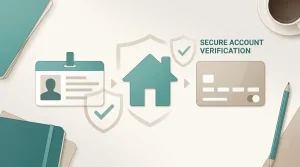
Verification starts with the operator’s own terms and cashier. The terms should identify the minimum deposit, and the cashier should accept that amount for the account and payment method in question. A statement on a promotional banner is not enough if the deposit screen sets a higher floor, or if the amount applies only under conditions not shown alongside the claim. If the cashier and the written terms disagree, the advertised figure is not a dependable description of the transaction.
The account must also belong to a UK-licensed operator. Remote gambling operators serving customers in Great Britain must hold the relevant licence from the UK Gambling Commission, regardless of where the business is based. Online gambling is legal in the UK only through licensed and regulated sites, and the operator must hold a current operating licence. A familiar logo, a polished website or a page describing an offer does not establish that status.
Casinos & Safety: UK Licensing and Player Checks
The name shown on the casino site should be checked against the operator information and the UK Gambling Commission’s register. This matters because a brand name and the legal entity responsible for operating it may not be identical. A credible check connects the site being used with the licensed operator, rather than relying on a badge or a general claim that the casino is “regulated”. A licence held by a different company does not, by itself, verify the site in front of the customer.
A specialist review once reported six UKGC-licensed casinos with genuine £1 cashier minimums, while identifying NetBet as the only UKGC-listed casino in that review’s list with that threshold. That is a dated, source-specific snapshot, not a standing census of the market. It does not establish what any operator’s cashier accepts now, and it does not prove a £3 minimum at a different site. The useful point is methodological: a stated cashier figure should be tied to a particular operator and checked against its own current deposit conditions.
Online casinos with an MGA licence in the UK
A claim about a £3 minimum deposit casino is therefore verifiable only when it survives several separate checks. The site must be covered by the operator’s current UK licence; the cashier must show that £3 is accepted as a deposit, rather than as a promotional threshold; and the stated conditions must apply to the account and method being used. If the claim appears only in an advert or an old review, it remains a claim until confirmed in the operator’s own current information.
The licence check is not a substitute for reading the deposit terms. Nor is a successful deposit alone proof that every description of the offer was accurate. The amount accepted by the cashier and the amount that qualifies for a promotion are distinct terms. A casino may accept a deposit while attaching separate conditions to an advertised offer. That difference belongs in the written terms, not in an assumption inferred from the headline.
Verifying a £3 Offer
- Check the operator’s current UK Gambling Commission licence status.
- Verify the minimum deposit amount in the actual cashier/deposit screen.
- Confirm the £3 threshold applies to the specific payment method being used.
- Match the site brand name with the licensed legal entity.
“Best”, “trusted” and “safe” are judgements, not deposit specifications. They do not establish the cashier minimum or the operator’s licence. For a practical assessment, the evidence is narrower: the exact amount accepted, the operator named in the legal information, and the licence status applicable to the site. A low figure without that chain of evidence says little about whether the offer is genuine.
Age and account controls are part of the same regulated setting. UK players must be at least 18, and operators must verify age before allowing a customer to deposit. A licensed operator must also provide access to account-level financial limits, with new customers prompted to set a limit before their first deposit. These requirements do not confirm a £3 threshold, but they help distinguish a regulated gambling service from a page that merely presents itself as one.
A genuine minimum is not established by a search result, a banner or a payment symbol. It is established by matching the operator, licence and current cashier terms. That is a stricter test than trusting a low figure at face value, and a more useful one: it identifies what the operator will actually accept rather than what its advertising suggests.
How the £3 Deposit Works Once It Reaches the Account
A £3 minimum deposit describes the smallest amount the cashier will accept under the stated conditions. Once credited, it becomes an account balance available for play, subject to the operator’s rules. It does not define the smallest amount that can be withdrawn, guarantee that the balance will remain intact, or establish that every game can be played with it.
£4 Minimum Deposit Casinos in the UK: What to Check
The practical sequence is simple: the deposit is credited, bets are deducted from the balance, and any returns are added back. The balance therefore changes with play. A £3 starting amount can fall, rise or reach zero; the cashier minimum does not alter those outcomes. It is an entry condition, not a measure of how long the balance will last or what it may be worth at cash-out.
The account balance is not the same as a cash-out amount
A balance shown in the account may contain funds with different conditions attached. The key distinction is whether money is available as withdrawable cash or is subject to an outstanding requirement. Where conditions apply, the displayed balance should not be treated automatically as an amount ready to withdraw. The account history and terms determine how deposits, returns and any restricted funds are recorded.
For a deposit-only session, the calculation is more direct: the available amount starts at £3, then changes as bets are placed and settled. If the remaining balance is below the minimum needed for a particular action, that action may not be available. The relevant figure is the current balance, not the original deposit. A cashier accepting £3 does not promise that a later balance can be paid out in any amount.
A balance shown in an account may include funds with different conditions, meaning the displayed total is not always immediately withdrawable.
This distinction matters most when the balance has grown only slightly. A player may see a positive figure in the account but still be unable to request it if the casino’s withdrawal threshold is higher. The funds have not necessarily disappeared; they may simply remain below the amount the cashier permits for a withdrawal request. That is a terms issue, not a consequence of the deposit being small in itself.
Compare the deposit and withdrawal rules
A specialist review reports minimum withdrawal thresholds of £10 to £20 at many UK casinos. That range should be read as a snapshot reported by that type of source, not as a fixed rule for every operator. The operator’s own cashier terms control the actual threshold, and the applicable figure can vary between accounts and change over time.
A separate specialist review describes a lower bracket: debit cards and some e-wallets can support transactions of £1, while minimum withdrawals in the cases it covers range from £1 to £5. These figures are not interchangeable with the broader reported withdrawal range. They illustrate that the cash-out floor depends on the casino and the terms in force, rather than following automatically from a low cashier minimum deposit.
The gap can be made visible without assuming any particular operator’s rules. If a casino accepts a £3 deposit but its withdrawal threshold is above the account’s available balance, a withdrawal request cannot proceed until the balance meets that threshold. Reaching it would require the balance to increase through play; that is possible, not assured. The deposit itself does not create a right to withdraw a larger amount, and further play can also reduce the balance.
£2 Minimum Deposit Casinos in the UK: How They Work
Before depositing, the relevant terms are therefore the cashier minimum, the minimum withdrawal, and any conditions that affect whether funds are withdrawable. These are separate checks. A low number on the deposit screen answers only the first one. The withdrawal page or account terms should clarify the minimum payout amount and any restrictions on the balance being withdrawn.
Wagering changes what can be cashed out
Play involves repeated deductions and returns, so the starting deposit is not a protected pot. A bet is taken from the balance; a return, if there is one, is credited according to the game’s rules. There is no fixed relationship between the amount deposited and the amount available at the end of a session.
Where bonus or other promotional funds are involved, additional terms may affect withdrawal. The qualifying rules can determine which balance is usable and whether a withdrawal is available before conditions are met. A deposit and a promotional balance should not be assumed to have identical status. The specific account terms are decisive; the figure in the balance display alone may not explain the distinction.
For a £3 deposit without promotional conditions, the main operational question is whether the remaining cash balance meets the casino’s withdrawal floor. If it does not, the amount may have to stay in the account, subject to the operator’s rules. If it does, the cashier’s other stated requirements still apply. A low deposit can therefore be accepted cleanly while the resulting balance remains too small to cash out. The arithmetic is not complicated; the terms are what decide which arithmetic applies.
Withdrawal Thresholds
A casino may accept a £3 deposit, but a withdrawal request cannot proceed if the balance remains below the operator’s minimum cash-out floor.
A financial limit should be set before the first deposit, as required for new customers at UK-licensed operators. That limit concerns the amount allocated to gambling, not the cashier’s minimum or the withdrawal threshold. Keeping those figures separate makes the account mechanics easier to assess: £3 is the entry amount, the live balance is the amount available for play, and the operator’s withdrawal rule determines when a cash-out request can be made.
Real-Money Play on Mobile: The Limits That Matter
A £3 minimum deposit on a mobile casino sets the amount that can be added to an account; it does not set the cost of a session or the amount that will remain afterwards. Once real-money play begins, the balance changes with each stake and each result. A phone makes the account accessible, not the outcome predictable.
Many slots accept stakes from £0.10 to £0.20 per spin. At those stakes, a £3 balance represents 30 spins at the lower amount or 15 at the higher one, if every spin returned nothing. That is a way to measure exposure, not a forecast: wins can extend play, while losses can reduce the balance sooner. No mobile setting can turn a small deposit into a guaranteed number of plays or a guaranteed return.
No-Minimum-Deposit Casinos in the UK: Payment Rules
The distinction matters because a cashier minimum is only an entry condition. A £3 minimum deposit mobile casino may accept that amount for real-money use, but the amount available to play can depend on what actually reaches the account and on the stake selected. The same balance can cover a different number of spins across games. A displayed minimum stake is not a promise that every play will cost that amount, and the balance is not protected from being used.
Mobile access also does not change the rules for legal real-money gambling in Great Britain. A person must be at least 18, and a UK-licensed operator must verify age before allowing a deposit. A site that accepts a payment before the required check is complete should not be treated as a normal shortcut into play. Legal online casinos serving the British market require a current UK Gambling Commission licence; the small size of a deposit does not alter that requirement.
Before the first deposit, the operator must prompt a new customer to set a financial limit and make account-level limit controls accessible. This is a practical step, not a decorative setting. A limit should be based on what can be spent without affecting essential costs, and it should be set before a mobile session begins. A small starting balance can make an individual session look contained, but repeated deposits can change the total outlay. The relevant figure is therefore not only the first £3, but the amount allowed into the account over time.
Do
- Set a financial limit before the first deposit.
- Base limits on affordable spending without affecting essential costs.
- Use account-level controls to manage total outlay over time.
Don’t
- Confuse a small initial deposit with a low-cost outcome.
- Assume a small starting balance prevents repeated deposits.
- Rely on a low entry figure as a replacement for a spending plan.
Mobile screens can make it easy to move from the cashier to a game, but they do not remove the need to distinguish deposit amount from spending limit. The deposit is a transaction; the limit is the control on account use. Both matter before real-money play, especially where a quick session can involve repeated spins. Online slots in Britain must not offer autoplay, and each spin must last at least 2.5 seconds. Those rules set boundaries around play mechanics, but they do not prevent a balance from being spent through successive choices.
A £3 minimum deposit online casino can therefore be low-cost only in a narrow sense: the initial amount required to fund the account is small. Whether a mobile session stays within that amount depends on the stakes chosen, the results and any further deposits. The sound comparison is between the accepted deposit and the account limit, not between a small entry figure and an assumed low-cost outcome.
Bonuses on a £3 Deposit: The Qualification Math
A cashier accepting £3 does not mean a welcome offer will attach to that deposit. The deposit threshold and the promotion’s qualifying threshold are separate conditions: one governs whether money can enter the account, the other whether the account meets the offer rules.
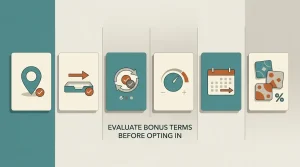
Some bonus terms set a qualifying deposit at £10 even where the cashier accepts £5. Under that condition, a £3 deposit falls £7 short. It can still be a real-money deposit, but it does not trigger that promotion. The exact figure must come from the offer terms in force when the deposit is made; a headline showing a bonus alongside a low cashier minimum is not proof that both apply together.
Online Casinos with No Sister Sites in the UK
The same distinction matters when an offer is described as a no-deposit bonus. That label refers to an offer not requiring a qualifying deposit, whereas a bonus advertised in connection with a £3 minimum deposit may still require a deposit and may set its own higher threshold. The terms determine which it is. A £3 minimum-deposit casino is not automatically a casino where a £3 payment unlocks a welcome deal.
The calculation then turns on wagering. Since 19 January 2026, the UK Gambling Commission has capped wagering requirements for bonus funds at 10x. A bonus of £3 subject to the maximum would therefore require £30 in qualifying wagers before the bonus funds meet that condition. The deposit itself is not the wagering requirement: the calculation is based on the bonus amount. Any game restrictions and maximum withdrawal caps also attach to the bonus terms, not to the payment method used to deposit.
Older descriptions of casino promotions may quote requirements of 30x to 65x the bonus value. Those figures do not describe a permissible current wagering condition for a UK-licensed offer after the cap took effect. They can make an offer look substantially harder to clear, but current terms should be assessed against the applicable limit rather than carried over from outdated promotional material.
Bonus Wagering Calculation
Step 1: Identify Bonus Amount
Determine the bonus funds credited (e.g., £3).
Step 2: Apply Wagering Cap
Apply the UKGC maximum wagering requirement of 10x.
Step 3: Calculate Total Wager
Multiply the bonus by the cap (£3 × 10 = £30) to find the required qualifying wagers.
A useful comparison is therefore not simply “bonus offered” versus “no bonus”. It is the qualifying deposit, the amount of bonus funds credited, the wagering multiple, eligible games, any withdrawal cap and the time allowed to complete the conditions. If a £3 deposit does not qualify, the advertised bonus has no value for that transaction. If it does qualify, the wagering condition still determines how much play is required before the bonus-related balance can be withdrawn.
The no-GamStop wording does not change this arithmetic or make an offshore offer equivalent to a UK-licensed one. Remote operators serving Great Britain must hold the relevant UK Gambling Commission licence. A casino outside that system is not made compliant by accepting a £3 deposit or advertising a bonus. For a UK-licensed promotion, the applicable bonus conditions and the wagering cap remain the material tests.
Before a first deposit, operators must prompt new customers to set a financial limit. That limit should be based on the amount available for play, not on the bonus headline: promotional value is conditional, while the deposited money is already committed. A £3 payment can be small and still fail to qualify; the cashier and the promotion are separate sets of terms.
Slot Stakes and Small-Balance Play
A £3 balance can look substantial beside a single slot stake, but the useful comparison is the number of spins that the balance can fund before any result is counted. Many slots allow stakes between 10p and 20p per spin. At the lower end, £3 covers 30 spins; at the higher end, it covers 15. These are arithmetic ceilings, not forecasts of how long a session will last.
Anjouan Casino Licence in the UK: What It Means
The calculation assumes every spin costs the selected stake and returns nothing, with no other deductions. A winning spin may add money to the balance, while a losing spin reduces it by the stake. Neither outcome is predictable, so a balance that could fund a certain number of spins on paper cannot guarantee that number in actual play. The distinction is simple: stake size determines the cost of each spin, not the result.
The stated minimum stake also does not necessarily apply to every game or every stake setting within a game. Before starting, the selected stake should be checked on the game screen. A slot may offer a range of stake options, and choosing a higher setting changes the calculation immediately. If the stake is doubled, the same starting balance funds half as many spins before winnings or losses are considered. The game’s displayed cost is therefore more useful than the casino’s headline minimum deposit.
A practical way to assess a £3 deposit for slots is to treat the balance as a fixed play budget, then divide it by the chosen stake. That gives a maximum number of paid spins under the no-return assumption. It does not account for variation in outcomes, and it should not be read as a target that must be reached. Stopping before the balance is spent remains consistent with the original budget; continuing after it is gone requires a separate decision and a separate amount.
Calculating Potential Spins
For a £3 balance:
- At £0.10 per spin: 30 spins (assuming no returns).
- At £0.20 per spin: 15 spins (assuming no returns).
Note: Wins can extend play, while losses reduce the balance sooner.
The label “£3 minimum deposit” describes the amount accepted into the account, not the cost of a slot session or the number of spins available. Two players depositing the same amount may use different stake settings and therefore face different costs per spin. The deposit figure alone cannot show how quickly a balance might change.
This is also why a small deposit does not make a slot low-risk in any mathematical sense. Lower stakes reduce the amount committed on each spin, but outcomes remain uncertain and repeated spins can use the balance. The useful comparison is between the chosen stake and the available funds, not between a deposit label and an assumed length of play. A £3 balance can support a limited sequence of low-stake spins; it cannot guarantee a particular number of spins, a return, or a longer session.
PayPal and the Payment-Method Minimum
A £3 cashier minimum does not automatically mean that every payment option has a separate £3 threshold. At a given UK operator, the minimum is generally shared across payment methods, although some casinos set a higher floor for direct banking than for cards or e-wallets. The cashier’s own payment screen is the relevant place to confirm the amount for the selected method; a site-wide headline may not show a method-specific restriction.
PayPal is an e-wallet, but its presence at a casino cannot be inferred from the cashier minimum. Where it is offered, the account must also meet the rules for gambling payments in Britain. Credit cards cannot be used for gambling deposits, including through a money-service route, and a wallet cannot be used where it permits credit-card funds to finance gambling. The permitted funding route therefore matters as much as the displayed deposit amount.
Merkur Casino Online in the UK: Games and Access
Fees can alter the economics of a small payment without changing the casino’s stated minimum. A specialist payment-method review reports flat transaction fees ranging from £1 to £3 for some providers. If such a fee is deducted from a £3 payment, the amount reaching the gambling account would be between £2 and nothing; if charged separately, the account credit may remain £3 while the payer bears the additional cost. The fee schedule and whether the charge is deducted or added must be clear before confirming a transaction. A fee at the upper end would consume the entire deposit, which is a poor fit for a small-balance payment.
The comparison should therefore separate three figures: the casino’s cashier minimum, any threshold imposed by the payment method, and the amount credited after charges. These can coincide, but they are not interchangeable. A PayPal option with a low stated minimum does not establish that a £3 payment will be accepted or credited in full. Conversely, a higher minimum shown for direct banking does not prove that cards or e-wallets share it.
For a £3 deposit, the practical test is the final confirmation screen: payment method selected, amount requested, any fee disclosed, and net account credit displayed. If those figures do not reconcile, the nominal minimum alone is not enough to judge the transaction.
Payment Fees
Transaction fees from providers can reduce the amount reaching the gambling account or add separate costs to the payer.
New Casino Claims and the £3 Minimum
A newly launched casino is not automatically a lower-deposit casino. “New” describes the operator’s market position, not the cashier rules. A £3 minimum deposit claim needs to match the amount the cashier actually accepts for a UK account; a headline or welcome banner is not enough to establish that condition.
The next distinction is between depositing and qualifying for an offer. A specialist review of welcome offers reported qualifying deposit thresholds of £5 to £10. On that basis, a £3 payment could be accepted as account funds while remaining below the promotion’s entry condition. The difference is practical: the deposit may be usable for real-money play, but the offer would not attach unless its terms explicitly include that amount.
The same specialist review reported that some casinos exclude the lowest deposit bracket from welcome promotions, restrict certain payment methods at that level, or set a withdrawal minimum above the deposit. Those conditions should not be treated as universal rules; they are reasons to read the current cashier and promotion terms as separate documents. A “£3 minimum” may refer only to one payment route, while another route has a different threshold. A displayed promotion may also require a larger qualifying deposit than the cashier will accept.
For a new operator, the useful comparison is therefore between three stated conditions: the minimum accepted by the cashier, the minimum that qualifies for the advertised offer, and the point at which funds can be withdrawn. If those figures do not match, the smallest deposit is not necessarily the amount that accesses the advertised deal or can later be cashed out.
Claims should also be tied to a UK Gambling Commission-licensed operator serving British customers. Launch language can change quickly; the terms attached to the account and offer determine what the deposit does. A low entry figure is a transaction condition, not evidence of a bonus or a better overall deal.
No-ID-Verification Casino Withdrawals in the UK
Pay by SMS: Why a £3 Deposit May Not Be Available
Pay by SMS can look like a straightforward way to fund a casino account: the charge is placed through a mobile-billing service rather than entered as a card payment. That does not make it a universal cashier option. Availability depends on the operator and the payment methods shown for the account; a casino accepting a £3 deposit by another route does not thereby accept the same amount by phone billing.
A specialist review describes the £1 tier as rare in the UK and associated with particular mobile-billing services, including Boku and Payforit. That is a narrow exception, not evidence that SMS deposits are generally available at that amount. Nor does it establish that a £3 payment will be accepted: the cashier’s stated minimum for the selected method is the relevant condition.
The practical check is to open the deposit screen and select the phone-billing option, if one is offered. The displayed minimum and any method-specific terms determine whether £3 can be submitted. A site’s headline minimum may refer to a different payment route, so it is not a substitute for checking the cashier. If SMS billing is absent or its minimum exceeds £3, the deposit cannot be made that way, even if another method permits a smaller payment.
Mobile billing should also be assessed as a payment route, not as a lower-cost form of play. The amount charged must be understood before confirming the transaction, and the account must meet the operator’s age-verification requirements before depositing. UK players must be at least 18. Remote operators must also prompt new customers to set a financial limit before their first deposit.
The distinction is simple: a £3 cashier minimum describes an accepted deposit amount, while an SMS option has its own availability and terms. Neither should be assumed from the other.
Which UK casinos accept a £1 deposit?
NetBet is listed as a UKGC-licensed casino with a £1 cashier minimum. Check the cashier for the current minimum on your account and payment method.
Which payment methods usually accept £1 deposits?
Debit cards and some e-wallets can support £1 deposits; Boku and Payforit mobile billing are also associated with the rare £1 tier. Some casinos set higher minimums for particular payment methods.
Can I use a £1 deposit to claim all welcome bonuses?
No. Welcome offers typically require a £5–£10 deposit, and some casinos exclude the lowest deposit tier from promotions.
Can players claim a bonus with a small deposit?
Yes, if the deposit meets that offer’s qualifying minimum. Welcome offers typically require £5–£10, and some require £10 even when the casino accepts deposits of £5.
How should players choose a low-deposit casino in the UK?
Check the casino’s own terms and cashier to confirm the minimum for your account and payment method, then match the site to its licensed operator on the UK Gambling Commission’s register.
What is the lowest deposit available at UKGC-licensed casinos?
The lowest reported tier is £1, but it is rare and may be limited to particular payment methods.
Material created by the team Jettbet