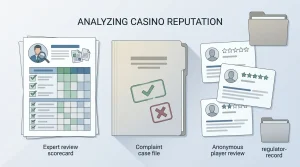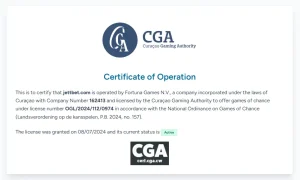


A Curaçao licence, non-GAMSTOP access and payment options answer different questions and do not replace UK gambling safeguards.
What a Curaçao Licence Does Not Change About UK Gambling
A Curaçao licence and GAMSTOP address different questions. A licence is a regulator’s authorisation of an operator; GAMSTOP is a self-exclusion scheme covering participating online gambling websites and apps. Neither label can be used as a substitute for the other. In particular, a Curaçao licence does not make a site part of GAMSTOP, and a site’s absence from GAMSTOP does not establish that it is authorised to serve customers in Great Britain.
GAMSTOP is the national online self-exclusion scheme for Great Britain. Its multi-operator coverage blocks access to participating licensed gambling websites and apps, rather than acting as a universal filter for every gambling site on the internet. The Gambling Commission made participation compulsory for online operators from 31 March 2020. That requirement explains the scheme’s reach among UK-licensed online operators; it does not mean that every overseas site is connected to it.
The practical distinction is between a shared exclusion system and the wider market. A customer who registers with GAMSTOP is excluded across the participating operators covered by the scheme. That does not, by itself, mean that the registration blocks an account at every online casino based outside the UK. The name “multi-operator” describes coverage across participating businesses, not coverage across every operator worldwide.
This matters when considering online casinos licensed in Curaçao. A site may refer to a foreign licence, but that claim does not determine whether it participates in GAMSTOP. Nor does the presence or absence of a GAMSTOP block settle whether the operator holds the authorisation required to offer real-money gambling to people in Great Britain. These are separate checks, with separate consequences. Treating them as one would turn a boundary of the self-exclusion scheme into a conclusion about the site’s legal status.
For the same reason, “not on GAMSTOP” is a narrow description, not a general assurance. It can indicate that the scheme’s cross-operator block does not apply to that site. It does not establish that the site is safe, that its licence gives it permission to serve British customers, or that a person’s self-exclusion commitment has ceased to matter. A Curaçao licence does not rewrite the scope of a UK self-exclusion registration.
There is also a difference between the scheme’s coverage and the legal rules for the market. Remote gambling operators selling into Great Britain must hold the relevant Gambling Commission licence, regardless of where the operator is based. A foreign licence does not replace that requirement. So the fact that a Curaçao online casino is outside GAMSTOP’s participating network cannot be read as permission for it to offer gambling to British customers without UK authorisation.
The boundary is therefore not “UK sites versus foreign sites” in a simple technical sense. GAMSTOP blocks access across participating licensed websites and apps. Its compulsory status for UK online operators has applied since the stated commencement date, while the scheme itself is not a promise that every offshore account will be blocked. The regulatory question and the exclusion question remain distinct even when they arise on the same page.
British Casinos Not on GamStop: What to Know
That distinction should shape how claims about a new Curaçao casino are read. A licence reference concerns the operator’s regulatory position; a GAMSTOP reference concerns whether the scheme’s exclusion operates across that service. Neither phrase answers every question about the other. Likewise, searches for the best Curaçao casinos online may bring together sites with different regulatory arrangements, but a comparison cannot turn a foreign licence into UK authorisation or expand GAMSTOP’s coverage.
The sound reading is limited and precise: GAMSTOP is a cross-operator self-exclusion scheme for participating online services in Great Britain, and participation became compulsory for UK online operators in 2020. A Curaçao licence does not alter that scheme’s boundaries. It also does not remove the separate requirement for operators serving the British market to hold a UK Gambling Commission licence. The two systems meet in the customer’s decision, but they do not merge into one.
Non-GAMSTOP Access Is Not a Workaround for Self-Exclusion
A search for Curaçao casinos outside GAMSTOP can make access sound like a technical gap: an account that the scheme does not block, and a route back to gambling. That interpretation leaves out the point of self-exclusion. It is a formal commitment not to gamble, not simply a setting that applies while a particular website refuses entry.
Self-Exclusion
Opening a new account at a non-GAMSTOP site to bypass a self-exclusion undermines the purpose of the commitment and may breach the agreement terms.
GAMSTOP lets people exclude themselves from UK-licensed online casinos through one scheme. During an active exclusion, it prevents access to existing gambling accounts and the creation of new ones with participating online operators across the UK. A site described as a non-GAMSTOP Curaçao casino may sit outside that scheme’s coverage. That does not make gambling there consistent with the commitment already made.
The distinction is practical. A barrier can prevent access at covered operators; it cannot turn an active decision to stop gambling into permission to continue elsewhere. Opening an account at another site to get around an exclusion undermines its purpose. It may also breach the terms of the self-exclusion agreement. The fact that a site is reachable, or accepts a registration, does not settle whether using it is compatible with that agreement.
Self-exclusion depends on a person’s commitment as well as on measures taken by gambling businesses. The player remains responsible for sticking to the agreement. That responsibility does not disappear when a search result describes a casino as “not on GamStop”, nor does a different licensing location erase the original decision to stop.
This matters because the immediate calculation can be misleading. A new account may appear to restore access, but it adds another place where gambling can take place while the exclusion is active. It does not remove the existing exclusion or reverse the reasons for choosing it. Treating non-GAMSTOP access as a workaround therefore exchanges a protective barrier for an unprotected opportunity to gamble elsewhere.
A safer response is not to open another account. Self-exclusion is most useful when it covers all the places where gambling might be tempting, rather than only the first account that prompted the decision. For online gambling, that can mean using GAMSTOP for participating UK-licensed operators and making separate self-exclusion requests to any individual gambling business outside that coverage where an account exists or could become a temptation. The scope of the request matters: a block at one company does not itself establish a block at another.
Non-Gamban Casinos UK: Access and Self-Exclusion
Gambling businesses must offer self-exclusion. That obligation does not make every site part of GAMSTOP, and it does not transfer responsibility for the formal commitment away from the person who made it. Where a site has its own self-exclusion process, using it can add a direct barrier there; it is not a reason to create an account first or to treat the process as a substitute for an active GAMSTOP exclusion.
There is also a separate regulatory issue. Remote gambling operators offering real-money gambling to customers in Great Britain are required to hold a UK Gambling Commission licence. A Curaçao licence is not a UKGC licence. A site operating outside the UK regulatory system should not be treated as an approved alternative simply because its account is not blocked by GAMSTOP. The scheme’s reach and the UK’s licensing requirements are different questions, but neither turns an active self-exclusion into a safe invitation to gamble elsewhere.
Financial Risk
Losses made at overseas sites are not recoverable via the regulator, and GAMSTOP cannot provide refunds for money spent gambling.
Losses made at an overseas site do not become recoverable because GAMSTOP did not block access. The regulator cannot provide refunds for money spent gambling. That makes the apparent convenience of a non-GAMSTOP account a poor substitute for the protection the exclusion was meant to provide: the account may permit play, while offering no reversal of the decision or its financial consequences.
A search result promising the “best” non-GAMSTOP Curaçao casinos cannot change those terms. Ranking language concerns a site’s presentation, not whether opening an account respects an active self-exclusion. The relevant decision is not which outside casino appears more attractive; it is whether gambling anywhere is compatible with the commitment already in force. When the answer is no, another account is not a workaround but a way to bypass the barrier voluntarily.
Where GAMSTOP’s Protection Stops—and What Still Applies
GAMSTOP is a multi-operator scheme, not a universal block on every gambling website. Its exclusion applies across participating online gambling operators and their sites or apps. That boundary matters when assessing claims about Curaçao casinos: the scheme should not be described as blocking every overseas site, nor does a site’s absence from GAMSTOP establish that it is outside all gambling rules.
Coverage and an operator’s own duties are separate questions. A business that is not part of the scheme does not become a participating operator simply because a customer has registered with GAMSTOP. Conversely, a gambling business cannot treat self-exclusion as optional merely because a customer’s request was made directly to it rather than through the national scheme.
Self-exclusion is also specific to the venues and websites included in the arrangement. A person who has excluded themselves from a particular gambling business must be refused service there. The business is expected to take reasonable measures to stop that customer gambling with it; the obligation concerns the operator’s conduct, not a promise that one registration will block every site in the market.
For online gambling, self-exclusion can be arranged through GAMSTOP across participating operators or directly with an individual casino. A single-site request therefore has a narrower reach than a multi-operator registration. Land-based venues have their own arrangements. The practical distinction is scope: a scheme registration covers its participating network, while a direct request covers the business or venue named in that request.
Gambling businesses must provide a way to self-exclude. For a UK-licensed operator, this is part of the required consumer protection framework, alongside steps to prevent an excluded customer from gambling. An account-level exclusion still has meaning even where it does not reach other brands. Once an agreement applies to a business, that business should not continue to serve the excluded customer.
The label “not covered by GAMSTOP” should therefore be read narrowly. It describes a relationship with the scheme; it does not prove that an operator has no self-exclusion process, that a customer has no existing agreement, or that the operator’s conduct is beyond scrutiny. Nor does it establish that a Curaçao casino is suitable for a UK customer. A licence name, a site’s location, or a payment brand cannot answer those separate questions by itself.
The same applies to searches for Curaçao casinos offering Neteller or Skrill. A payment method says how a transaction may be made, not whether the casino participates in GAMSTOP or how it handles an exclusion request. Availability of a payment option is not evidence of protection, and its presence cannot expand the reach of a self-exclusion registration.
Do
- Use GAMSTOP for participating UK-licensed operators
- Make separate self-exclusion requests to individual overseas businesses
- Treat each venue and website as a separate exclusion requirement
Don’t
- Assume one registration blocks every site in the market
- Rely on payment methods as a substitute for safety
- Treat a non-GAMSTOP label as a general assurance of safety
The financial consequence of treating these categories as interchangeable is straightforward: scheme coverage, an individual operator’s exclusion process, and payment arrangements are different controls. None should be assumed to substitute for another. A person seeking protection across multiple places where gambling may be tempting needs to consider those places individually as well as any multi-operator scheme. An exclusion is a formal commitment, and gambling at a non-GAMSTOP casino could breach its terms.
If an operator fails to respect an exclusion, the relevant issue is whether it followed its own obligations and took appropriate steps to prevent further gambling. GAMSTOP’s coverage is one part of the system; it is not a blanket guarantee that every non-participating website will be blocked. The boundary is limited, but the duties attached to a self-exclusion agreement remain real.
Curaçao Licence Claims and the UKGC Distinction
A Curaçao licence and a UK Gambling Commission licence are not interchangeable credentials. A casino may describe itself as licensed in Curaçao, but that claim does not establish that it holds permission to serve customers in Great Britain. Remote gambling operators offering services to consumers in Great Britain must hold the relevant UKGC licence, wherever the operator is based. For real-money online casinos serving the British market, the UK licence is the relevant test of whether the business is within the domestic regulatory system.
Non-UK casinos: regulation, licences and protections
This distinction matters when interpreting a Curaçao casino licence claim. It concerns the operator’s stated licensing jurisdiction; it does not by itself show that the operator is authorised in the UK, or that the protections attached to UKGC licensing apply. A licence label is not a portable set of safeguards. The legal position turns on the market served and the licence required for that market, not simply on the place named in an operator’s footer.
GAMSTOP participation is tied to the UKGC framework. The Gambling Commission made participation compulsory for online operators from 31 March 2020. Since that requirement took effect, UKGC-licensed casinos have been required to block customers who are self-excluded through GAMSTOP. The rule therefore gives GAMSTOP a defined connection to licensed operators serving the British market; a separate overseas licence does not create that connection.
The distinction can be stated plainly: a Curaçao licence claim is not proof of GAMSTOP participation, and it is not a substitute for a UKGC licence where one is required. Equally, a site’s use of the phrase “Curaçao licensed” does not establish that its accounts, complaints arrangements or gambling controls sit within the UKGC system. Those conclusions cannot be drawn from the jurisdiction name alone.
A “Curaçao eGaming” reference should be read as a claim about offshore licensing, not as evidence of UK authorisation. The name may identify the licensing authority an operator says applies to it, but the phrase alone does not establish the scope or current status of that permission. Nor does it answer whether the operator holds a separate UKGC licence. These are different questions, and combining them produces a misleading shortcut.
A Curaçao casino licence list, even if presented as a directory of operators making that claim, would not be a list of UK-licensed casinos or of sites participating in GAMSTOP. The category label cannot do that work. For a UK-facing service, the material distinction is whether the operator holds the UKGC licence required to serve the British market; GAMSTOP’s compulsory participation rule applies within that licensed framework.
This is why licence wording should not be treated as a ranking signal or a guarantee of equivalent protection. “Licensed” without the jurisdiction is incomplete for a UK reader, while naming Curaçao does not resolve the UKGC question. The two labels describe different regulatory relationships. One does not cancel or replace the other.
How to Assess a ‘Best’ Claim Without a Verified Shortlist
“Best” is a conclusion, not a licence category. A claim about the best Curaçao casinos for UK players needs evidence that can be checked against consistent criteria. A polished review, a payment badge or a prominent position on a page does not establish that an operator meets UK requirements.
For gambling offered to customers in Great Britain, the baseline is whether the operator holds the relevant UK Gambling Commission licence. A Curaçao licence does not replace that requirement. This is a practical distinction: a casino may describe itself as Curaçao-licensed, but that description alone does not establish that it is authorised to serve the British market.
The comparison should therefore begin with safeguards rather than promotional features. UK-licensed remote operators must verify a customer’s age before allowing a deposit. They must prompt new customers to set a financial limit before their first deposit and provide accessible controls for managing account limits. These are testable account conditions, unlike general claims that a site is “safe” or “player-friendly”.
Casinos & Safety: UK Licensing and Player Checks
Self-exclusion is another baseline, not an optional extra. Gambling businesses must provide a way to self-exclude. Players can use GAMSTOP to ban themselves from gambling with UK-licensed online casinos; registration blocks access to UKGC-licensed platforms for the selected fixed period. A site’s own self-exclusion arrangements and its UK regulatory status should not be treated as interchangeable facts.
Complaints handling also has a concrete standard. UKGC licensees must provide an internal complaints process and access to an approved Alternative Dispute Resolution service. A comparative review can state whether those routes are available and identify the relevant process. Calling support “excellent” without evidence says less.
Claims about game controls can be checked too. Online slot autoplay is banned in Britain, and each online slot spin must last at least two and a half seconds. The maximum stake per game cycle is five pounds for customers aged twenty-five and over, and two pounds for those aged eighteen to twenty-four. These rules apply to UK-licensed casinos; they are not proof that an offshore site follows UK requirements.
A label such as “best Curaçao casino” or “best Curaçao casinos not on GAMSTOP” does not demonstrate compliance, safer account controls or a fair comparison. The useful questions are narrower: what licence covers service to British customers, what account protections are in place, and how can a complaint be escalated? If those points are not evidenced, the ranking is an assertion rather than an assessment. A list can still be commercially arranged; the word “best” does not make its criteria independent.
Assessing Casino Claims
- A Curaçao licence does not replace the requirement for a UKGC licence to serve British customers
- ‘Best’ claims should be verified against testable safeguards like age verification and financial limits
- UK-licensed sites must provide internal complaints processes and ADR access
- Specific game controls, such as the ban on slot autoplay, only apply to UK-licensed casinos
Bitcoin Payments Do Not Remove UK Account Controls
A Bitcoin payment option does not determine which gambling rules apply to an account. The relevant distinction is whether an operator holds the licence required to offer remote gambling to customers in Great Britain. A Curaçao connection or a cryptocurrency cashier does not replace that requirement. Online gambling in the UK is legal only through licensed and regulated sites.
That matters when assessing a Bitcoin casino associated with Curaçao. The payment method is not evidence that the operator is authorised to serve British customers, nor does it establish what account safeguards apply. A deposit route and the regulatory status of the gambling business are separate matters; treating them as one is a poor piece of accounting.
For UK-licensed remote operators, age checks come before a customer is allowed to deposit funds into a gambling account. New customers must also be prompted to set a financial limit before making their first deposit, and account-level limit controls must remain accessible. Those requirements attach to the licensed gambling service, not to the currency used to fund it.
Accordingly, a Bitcoin option does not remove the age-verification step or the financial-limit controls on a UK-licensed account. Nor does the appearance of a crypto payment method establish that an overseas site follows the same UK requirements. The operator’s licence and the account’s actual safeguards need to be considered independently of the payment label.
GAMSTOP is another account-level boundary, not a payment setting. Registration blocks access to UKGC-licensed gambling platforms for the selected exclusion period. Changing from a bank transfer to Bitcoin does not alter that status at a participating UK-licensed operator. A different payment method cannot reinstate an excluded account.
The phrase “Curaçao Bitcoin casino” can describe a payment and licensing combination, but it cannot settle whether the service is lawful for the British market or suitable for someone seeking safeguards. Before treating any account as a UK option, its authorisation to serve customers in Great Britain and its provision of account controls are the material checks. A Bitcoin logo answers neither question.
The same distinction applies to casino offers presented for 2026: a date or payment label does not certify current UK authorisation, age checks or financial-limit tools. Where an operator is outside the UK licensing system, British consumers should not assume UK account protections apply merely because a deposit can be made in Bitcoin. Payment technology changes the transfer method; it does not rewrite the rules governing the gambling account.
Paysafecard Searches and the Limits of Payment-Based Safety
A Paysafecard label at a casino cashier answers only a narrow question: whether that payment option is presented. It does not establish who operates the gambling account, what rules apply to the operator, or whether the account has the safeguards required for customers in Great Britain. The same distinction applies when assessing a Curaçao casino’s safety: a payment brand is not a regulatory status.
For remote gambling operators serving the British market, a UK Gambling Commission licence is required regardless of where the operator is based. A payment method cannot replace that requirement. Nor does a familiar name at the deposit stage demonstrate that the site follows UK rules on age checks, financial limits or payment restrictions. These controls attach to the gambling business and account, not to the label on a cashier button.
Online Casino No Registration UK: What It Means
Age verification is a condition of access to deposits at UK-licensed remote operators. An operator must verify a customer’s age before allowing funds to be deposited into a gambling account. A payment option does not bypass that check. If a site presents a deposit route before age verification, the relevant issue is the operator’s process, not whether the payment method is prepaid or otherwise familiar.
Financial controls are separate from payment choice as well. New customers must be prompted to set a financial limit before making their first deposit, and account-level limit controls must remain accessible. A cashier that displays Paysafecard does not show whether those controls exist or how they are applied. The account settings and the operator’s compliance are what matter.
The UK restriction on credit-funded gambling payments is also distinct from the payment label. Remote operators cannot accept credit-card payments for gambling, including credit-card funds routed through a money service business. They also cannot accept wallet payments where the wallet permits credit-card funds to be used for gambling. The rule concerns the source and route of funds, not the marketing name displayed by a cashier.
That does not establish that Paysafecard is accepted by any particular Curaçao casino, or that every transaction using a named payment product has the same funding route. It does mean the product name alone cannot prove that a gambling account is compliant. A Curacao Paysafecard casino search may lead to sites with different operators and terms; the payment method supplies no shortcut for checking their legal status or account controls.
The practical distinction is simple: payment convenience and gambling-account safeguards are different things. Age verification, limits and restrictions on credit-funded payments remain operator responsibilities where UK rules apply. A deposit method cannot make an unlicensed site lawful for British customers, and it cannot make an account safe merely by being recognisable.
Crypto Licensing Does Not Override UK Payment Restrictions
A Curaçao licence label does not determine which funding routes a gambling business may use for customers in Great Britain. Remote operators offering gambling to British consumers must hold the relevant UK Gambling Commission licence, regardless of where the business is based. A foreign licence does not replace that requirement.
Payment rules apply separately. Remote gambling operators must not accept credit-card payments for gambling. The restriction also covers credit-card funds routed through a money service business, so changing the route does not change the source of the money.
Wallets are not automatically outside the rule. An operator cannot accept a wallet payment where the wallet allows credit-card funds to be used for gambling. The relevant distinction is therefore not simply whether the payment is described as a wallet transaction, but whether credit-card funds can reach the gambling account through it.
That boundary should not be confused with a blanket ban on cryptocurrency. The available UK rules establish restrictions on credit-card funding and certain wallet routes; they do not establish that every crypto payment is prohibited, or that a particular Curaçao casino accepts cryptocurrency. A payment label alone also cannot establish that a casino is licensed to serve British customers.
UK Payment Rules
Remote operators cannot accept credit-card payments for gambling, including funds routed through money service businesses or specific wallet routes.
For anyone assessing a crypto casino associated with Curaçao, the practical checks are distinct: whether the operator holds the UK licence required to serve Great Britain, and whether the funding route involves credit-card money directly or through a wallet or intermediary. A licence claim from elsewhere does not answer either question on its own.
The distinction is administrative rather than cosmetic. Describing a payment as crypto, a wallet transfer or an offshore transaction does not disapply UK restrictions where credit-card funds are involved. Nor does the presence of a Curaçao licence make an operator eligible to offer gambling legally in Great Britain without the required UKGC licence.
Trustly and the Meaning of ‘Without GAMSTOP’
Trustly is a payment method, not evidence of a casino’s relationship with GAMSTOP. Its presence on a deposit page cannot show whether a gambling business participates in the scheme, which licence it holds, or whether an account is covered by an existing self-exclusion. The same distinction applies to searches for Curaçao casinos that operate outside GAMSTOP: payment branding does not establish the scope or status of an exclusion.
No general conclusion about Trustly’s availability or terms at Curaçao casinos follows from the payment name alone. Those details depend on the individual operator and cannot be inferred from a logo or a “pay by Trustly” option. More importantly, the payment route does not alter the meaning of self-exclusion.
Self-exclusion is a formal agreement not to gamble. It places responsibility on the person who made the agreement to keep to it; changing the payment method does not suspend that commitment. Opening an account elsewhere to get around an active exclusion is not a neutral payment decision. Gambling at a non-GAMSTOP casino while excluded could breach the terms of that self-exclusion.
UK gambling businesses must provide a way to self-exclude. That obligation and the payment options shown by a particular site are separate matters. A payment provider cannot establish that a site is covered by GAMSTOP, and it cannot make an excluded person eligible to gamble.
The practical test is therefore not whether Trustly appears at checkout. It is whether gambling remains consistent with the active self-exclusion. If the exclusion is in force, using another site or payment route to gamble conflicts with the agreement. Payment convenience changes the movement of funds; it does not change the account status or the commitment not to gamble.
What a ‘Top Curaçao Casino’ Label Can Actually Prove
For UK readers considering non-GamStop Curaçao casino sites in 2026, check the available information carefully and consider the risks before gambling. The listed payout time is one factor to review, not a guarantee of an individual withdrawal.
1. EvoSpin
Payout speed: 1-3 business days EvoSpin lists a payout speed of 1–3 business days.
2. SpinFormula
Payout speed: 1-3 business days SpinFormula lists a payout speed of 1–3 business days.
3. Zombillion
Payout speed: 1-3 business days Zombillion lists a payout speed of 1–3 business days.
4. BeOnBet
Payout speed: 1-3 business days BeOnBet lists a payout speed of 1–3 business days.
5. Jetsetspins
Payout speed: 1-3 business days Jetsetspins lists a payout speed of 1–3 business days.
6. Revery Play
Payout speed: 1-3 business days Revery Play lists a payout speed of 1–3 business days.
7. NightWin
Payout speed: 1-3 business days NightWin lists a payout speed of 1–3 business days.
8. Chanze
Payout speed: 1-3 business days Chanze lists a payout speed of 1–3 business days.
9. SlotoSport
Payout speed: 1-3 business days SlotoSport lists a payout speed of 1–3 business days.
10. Amunbet
Payout speed: 1-3 business days Amunbet lists a payout speed of 1–3 business days.
“Top” is a ranking claim, not evidence of a safeguard. Without stated criteria and verifiable comparisons, the label establishes no more than how a site presents itself. It does not confirm that an operator can lawfully serve customers in Great Britain or that its account controls meet UK requirements.
For real-money gambling offered to customers in England, Scotland and Wales, the operator must hold a UK Gambling Commission licence. That licence carries concrete account protections. The operator must verify a customer’s age before allowing a deposit, prompt new customers to set a financial limit before their first deposit, and make account-level limit controls accessible. UK-licensed casinos must also provide responsible gambling tools, including self-exclusion.
Those are checks against defined requirements, not a league table of Curaçao casinos. A site’s position in a promotional ranking cannot substitute for them. Nor does a Curaçao licence, by itself, establish that the operator holds the UK licence required to offer real-money gambling to the British market.
A useful comparison therefore starts with what can be verified: the operator’s UKGC status and whether the relevant account protections are available. A “top” badge, star rating or broad claim of quality does not answer either point. If the operator lacks the required UK licence, a favourable label does not make its service a legal UK option or supply the protections attached to UKGC licensing. The distinction is plain: praise is an assertion; a licence and working account controls are testable conditions.
How does self-exclusion work?
You contact the gambling operator or scheme, provide information to confirm your identity, choose a duration and receive confirmation. The businesses covered by the exclusion must refuse service; after an agreement with an individual business, it must close your account, return any funds and remove your details from marketing lists.
How do I return from self-exclusion?
To end a GAMSTOP exclusion, contact GAMSTOP directly and request removal. A 24-hour cooling-off period applies after identity verification; you can cancel the request during that period, and operators may take a further 24 to 48 hours to update your status after removal.
How does GamStop benefit me?
GAMSTOP lets you exclude yourself from participating UK online gambling websites and apps through one free registration. While the exclusion is active, covered operators must block access to existing accounts and prevent you from opening new ones.
How long does it take for GamStop to become active after sign-up?
The 24-hour cooling-off period begins once your identity has been verified, and your exclusion remains active during that period.
How does a non-GamStop casino handle self-exclusion?
You can request exclusion directly from an individual gambling business, usually through its Responsible Gambling or Safer Gambling page or by contacting customer services. The business must close your account, return any funds, remove your details from marketing lists and take reasonable steps to prevent you from gambling there.
What self-exclusion options are available at non-GamStop casinos?
You can ask an individual casino to exclude you from its own service. GAMSTOP covers participating UK online operators, so it does not provide a shared exclusion across casinos outside its network.
Material created by the team Jettbet