

A foreign licence identifies the regulator overseeing an operator abroad, but does not by itself authorise services to customers in Great Britain.
What Non-UK Regulation Means for Casinos Serving the UK
A non-UK-regulated casino is an online gambling site that operates without oversight from the UK Gambling Commission (UKGC). The phrase “non-UK registered” is often used in the same context, but registration and gambling regulation are not interchangeable: the relevant distinction is whether the operator holds the licence required to offer gambling services in the market.
The operator’s own licence may come from a jurisdiction outside the UK. Common examples include Malta, Curaçao, Gibraltar and Anjouan. That licence identifies the regulatory framework under which the operator is authorised in that jurisdiction. It does not, by itself, establish that the operator is authorised to serve customers in Great Britain.
The distinction is about two different things: where an operator is licensed, and where it offers its services. A company may be based outside the UK and hold a foreign licence, but its location does not remove the licensing requirement that applies to operators serving Great Britain. Those operators require a UKGC licence regardless of where they are based.
When considering non-UK-registered casinos in 2026, payout timing is one practical detail to check. This list offers a concise reference to the payout speed stated for each operator.
1. EvoSpin
Payout speed: 1-3 business days EvoSpin lists a payout speed of 1–3 business days.
2. SpinFormula
Payout speed: 1-3 business days SpinFormula lists a payout speed of 1–3 business days.
3. Zombillion
Payout speed: 1-3 business days Zombillion lists a payout speed of 1–3 business days.
4. BeOnBet
Payout speed: 1-3 business days BeOnBet lists a payout speed of 1–3 business days.
5. Jetsetspins
Payout speed: 1-3 business days Jetsetspins lists a payout speed of 1–3 business days.
6. Revery Play
Payout speed: 1-3 business days Revery Play lists a payout speed of 1–3 business days.
7. NightWin
Payout speed: 1-3 business days NightWin lists a payout speed of 1–3 business days.
8. Chanze
Payout speed: 1-3 business days Chanze lists a payout speed of 1–3 business days.
9. SlotoSport
Payout speed: 1-3 business days SlotoSport lists a payout speed of 1–3 business days.
10. Amunbet
Payout speed: 1-3 business days Amunbet lists a payout speed of 1–3 business days.
A foreign licence is not a UK licence
The wording can make this distinction easy to miss. A casino described as “licensed” may indeed have a licence, but that statement is incomplete unless the licensing authority is identified. A licence from Malta, Curaçao, Gibraltar or Anjouan is not a UKGC licence. The regulator named on the operator’s licence therefore matters more than a broad claim that the site is licensed.
This is also why “online casino not registered in the UK” can be an imprecise description. The central issue is not simply whether a company has a UK address or appears in a general business register. It is whether the operator has the UK Gambling Commission’s authorisation required for gambling services in Great Britain. A foreign corporate location and a foreign gambling licence do not substitute for that authorisation.
The same distinction applies when a site is described as one of the online casinos not registered with GamStop. GamStop is a separate self-exclusion scheme, not a gambling regulator or a licensing jurisdiction. Its role is therefore different from that of the UKGC. A casino’s relationship to GamStop does not identify the authority that licenses it, and the licence does not establish whether the casino participates in that scheme. The two questions should not be collapsed into one label.
What the jurisdiction names indicate
Malta, Curaçao, Gibraltar and Anjouan are examples of jurisdictions associated with licences held by non-UK-regulated casinos. Their names indicate the source of the operator’s stated licensing framework. They do not establish that every casino licensed in a given jurisdiction has the same terms, oversight or relationship with customers in Great Britain.
Casinos & Safety: UK Licensing and Player Checks
This matters for broad categories such as Curaçao online casinos not registered with GamStop. “Curaçao” points to a licensing jurisdiction; “not registered with GamStop” describes a separate scheme status. Neither label, on its own, answers whether an operator holds a UKGC licence. The same principle applies to casinos licensed elsewhere: the foreign jurisdiction and the UK authorisation question are separate fields, not competing descriptions of one licence.
A site’s presentation may also use phrases such as “international casino” or “non-UK registered online casino.” Those descriptions can refer to a foreign base, a foreign licence, or both. They are not precise enough to settle the regulatory question. The useful distinction is between the regulator that issued the operator’s licence and the regulator whose authorisation is required for services offered to customers in Great Britain.
Keep the scope precise
“UK” is often used informally to describe the market, while the licensing requirement relevant here concerns operators serving customers in Great Britain. The location of the operator does not change that requirement. A business does not become exempt from it simply by operating from Malta, Curaçao, Gibraltar, Anjouan or another jurisdiction.
Accordingly, “non-UK-regulated” describes the casino’s position relative to the UK Gambling Commission: it operates without UKGC oversight. It does not mean that no regulator has issued the operator a licence anywhere. Conversely, naming a foreign licensing jurisdiction does not show that the operator is authorised to serve Great Britain.
Regulatory Distinction
A foreign gambling licence from jurisdictions such as Malta, Curaçao, Gibraltar, or Anjouan does not substitute for the UK Gambling Commission (UKGC) authorisation required to serve customers in Great Britain.
This is the basic framework behind references to online casinos not registered in the UK: establish which regulator issued the licence, then distinguish that licence from UKGC authorisation. The labels may be used loosely, but the regulatory categories are not interchangeable. A foreign licence describes one jurisdiction’s oversight; it does not replace the requirement that applies to operators serving Great Britain.
UK Law, Player Status and the Limits of GamStop
The legal position of a player and the legal position of a gambling operator are separate questions. Under the Gambling Act 2005, the focus is on businesses supplying gambling services into the British market. A person who uses an unlicensed site does not, on that account alone, commit a criminal offence under UK law. That distinction does not make the service lawful: remote gambling operators serving customers in Great Britain are required to hold a UK Gambling Commission licence.
The Act governs England, Wales and Scotland, rather than Northern Ireland. For British players, the important point is that the regulatory obligation falls on the operator offering the service, not on the individual merely for placing a bet. UK law does not expressly forbid British citizens from using gambling services that are licensed elsewhere. At the same time, a foreign authorisation is not a substitute for the UK licence required of an operator selling into Great Britain.
Online Casino No Registration UK: What It Means
These points can sound contradictory if “legal” is treated as a single status. They are not. A non-UK registered casino may hold permission from a regulator in another country, while lacking permission to serve the British market under the UK system. The operator’s compliance position and the player’s criminal liability are not interchangeable: the former concerns whether the business may provide the service in Great Britain; the latter concerns whether the player has committed an offence.
This distinction matters when interpreting phrases such as “casino not registered with GamStop”. GamStop is the UK Gambling Commission’s self-exclusion scheme. Casinos outside it are not participants in that scheme, so a self-exclusion registered through GamStop does not apply to them as it does to participating operators. A person searching for casinos not registered with GamStop is therefore looking at a different category of access, not a variation of the same exclusion arrangement.
Self-exclusion is practical only where the gambling business is connected to the scheme. If a site is outside GamStop, the scheme cannot require that site to apply the exclusion. That does not change the player’s legal status, nor does it alter the operator’s obligations under the British licensing framework. It describes a limit on where the exclusion takes effect.
The distinction can be set out plainly:
| Question | Position |
|---|---|
| Does the UK framework place the licensing obligation on the player? | No. The obligation to hold a licence applies to operators supplying gambling services into Great Britain. |
| Does playing on an unlicensed site itself constitute a criminal offence for the player? | No. |
| Does a GamStop exclusion cover a casino that is not part of the scheme? | No. Casinos outside the scheme are not covered by that self-exclusion arrangement. |
It separates three matters that are often compressed into one: operator authorisation, individual criminal liability and the reach of a self-exclusion registration. A favourable answer on one does not settle the others. In particular, the fact that a player is not committing a criminal offence does not confer UK approval on the site or bring it within GamStop.
The same reasoning applies to searches for a UK casino not registered with GamStop, including searches for Curaçao-based sites or for particular payment options such as PayPal or Boku. A payment method or place of registration does not determine whether GamStop applies. The relevant distinction is whether the operator participates in the scheme. Nor does describing a site as reputable establish that it is part of GamStop or authorised to serve Great Britain.
For someone who has chosen self-exclusion, the practical implication is direct: GamStop covers participating operators, not every gambling website that might be accessible from the UK. A site outside the scheme may remain available despite that exclusion. That possibility is not evidence that the exclusion has failed; it reflects the scheme’s limited reach.
Legal Risk
While using an unlicensed site may not be a criminal offence for the player, such operators are required by law to hold a UKGC licence to offer services in Great Britain.
The legal position is similarly bounded. British law does not explicitly criminalise a citizen merely for using a gambling service licensed in another country, but online gambling in Great Britain is legally offered by operators holding the relevant UK licence. The player’s lack of criminal liability should not be mistaken for a guarantee that every foreign site is lawful to operate in the British market, or that it will observe a GamStop registration.
How Offshore Casino Sites Handle Access and Verification
A casino site can be reachable from a British internet connection without being authorised to operate in the UK. Access and permission are separate questions: a page loading, an account form accepting details or a game opening does not establish that the operator may serve customers in Great Britain. This distinction matters particularly for casino sites not registered in the UK, where the operator’s own licence may set territorial restrictions that are not obvious from the first screen.
Anjouan is a clear example. An Anjouan licence does not authorise operation in the United Kingdom, or in other markets listed as restricted. A site carrying that licence therefore cannot treat its presence online as permission to serve British customers. The licence’s jurisdiction and its stated market restrictions determine what it covers; a logo or licence reference on a site is not, by itself, evidence that the site is authorised to operate in Great Britain.
Online Casinos with No Sister Sites in the UK
Access can also differ from one stage of an account to another. A visitor might be able to view a site, while registration, depositing or attempting to withdraw brings additional checks or restrictions. The practical question is not only whether a site opens, but whether its terms allow the relevant activity from the customer’s location and what evidence the operator may require before completing it. A label such as “new” or “best” does not answer either point.
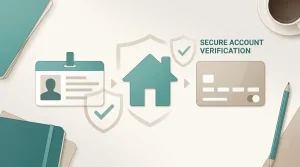
Identity checks are another possible interruption. Operators must verify a customer’s age before allowing a deposit. Further checks may arise later, including when a withdrawal is requested. That timing can matter: an account that appeared operational while playing may face a fresh review when funds are due to leave it. Verification is not necessarily complete merely because registration succeeded.
The ordinary purpose of identity verification is to establish who owns the account and whether the account activity can be processed. The specific documents and steps depend on the operator’s procedure. However, specialist reviews have described some offshore operators asking for notarised documents or requiring a video call as part of a withdrawal check. Those reports concern particular cases, not a standard procedure across all non-UK-based online casinos. The useful distinction is between a routine document request and an unusually burdensome demand that may delay access to funds.
Trusted UK Casino Guide: Check Licences and Safeguards
A request for more evidence does not by itself prove that an operator is acting improperly; it does mean the withdrawal process may be more involved than the registration screen suggested. The operator’s terms should explain what verification can be requested and at what stage. If those terms leave the process broad or unclear, the account holder has less certainty about what will be accepted and how long the review will continue. This is an operational risk, not a payment-speed estimate.
For slot sites not registered with GamStop, the same separation applies. A site’s availability is not proof of UK authorisation, and being outside a self-exclusion scheme does not make the site’s access conditions more transparent. Likewise, a casino site described as not registered with Gamban is not thereby assessed for identity procedures or permitted markets. Blocking tools and account verification address different problems; neither should be mistaken for a licence check.
Anjouan’s framework also sets a response period for complaints: operators must reply within 30 calendar days. That is a deadline for a response, not a guarantee that a withdrawal will be approved or that a dispute will be resolved in the customer’s favour. It is relevant when a verification issue becomes a complaint, but it does not remove the need to understand the operator’s process before an account is used.
The practical assessment is therefore procedural. The site’s terms should identify the territories it accepts, the licence conditions affecting access and the documents it may request. Registration, play and withdrawal are separate checkpoints, and passing one does not guarantee passage through the next. A UK-registered casino operates under a different authorisation framework; an offshore site’s ability to load in Britain cannot substitute for that status. For non-UK-regulated sites, the cost of unclear access rules may appear only when an account is reviewed or a withdrawal is pending.
Bonuses, Payment Routes and the Cost of a Withdrawal
A headline bonus is not its cash value. Its practical value depends on what must be wagered before it can be withdrawn, which funds count towards that requirement, when the offer expires and whether a cap limits the eventual payment. Those terms matter more than the advertised size of a welcome package, whether a site is described as new, mobile-friendly or live-casino focused.
Bonus Terms
Attention: Headline bonus amounts are not cash values; their actual value depends on wagering requirements, which can be 35x the stated amount or higher.
A specialist review has reported welcome offers at offshore casinos with wagering requirements of 35 times the stated amount or higher. That is an attributed observation, not a term that can safely be assumed to apply across the market: offers change, and the casino’s own current rules determine the calculation. A requirement of 35x means the relevant amount has to be staked repeatedly before qualifying funds can be withdrawn. The base may be the bonus alone or may include the deposit as well. Those are materially different calculations, so the offer’s definition of “wagering requirement” needs to be read alongside its eligible games and contribution rules.
For a bonus tied to both deposit and bonus funds, the qualifying balance can be larger than the bonus figure shown in the promotion. A player who focuses only on that headline amount may therefore underestimate the turnover needed. If some games contribute less, or do not count, wagering on them may make little or no progress towards release. The terms should also state whether winnings from bonus play become withdrawable once the requirement is met, or remain subject to another condition.
Expiry is another part of the price. An offer that must be used within a short window can require sustained play to complete its terms; unused bonus funds may then be removed under the conditions. Free spins can have separate rules from deposit bonuses, including limits on cashing out winnings. The relevant comparison is not simply which site advertises the largest package, but how much qualifying play it requires and what amount can ultimately leave the account. Without those details, a “best” or “top” bonus ranking has no stable financial meaning.
No-Minimum-Deposit Casinos in the UK: Payment Rules
Payment route and withdrawal value
Non-UK-regulated casinos may set fewer restrictions on deposits or withdrawals, and some may pay faster as a result. Available routes can include cards, e-wallets, bank transfers and cryptocurrency, sometimes handled through payment processors other than the casino’s main brand. A payment method shown for deposits does not, by itself, establish that the same route is available for withdrawals. The terms may specify a different payout method or conditions that apply before a withdrawal can be made.
The route also changes what “fast” means. Some descriptions put withdrawals at between 24 hours and five business days, depending on the method. Other accounts say a payment can take three or four weeks. Those accounts disagree; neither timing should be treated as a firm promise for every operator or transaction. Unlike a regulated timetable with an enforcement mechanism, the longer estimate comes with no regulatory clock that compels the casino to complete payment by a set point.
A specialist review has also described casinos applying daily, weekly or monthly withdrawal ceilings. Where such a ceiling applies, a large win may have to be paid in instalments rather than as one transfer. This is a reported condition, not a universal rule, so the specific cashier and withdrawal terms are decisive. The amount that can be requested at once, any limits on repeated withdrawals, and whether pending requests can be cancelled all affect how quickly the full balance reaches the player.
Withdrawal Limits
Some offshore casinos may apply daily, weekly, or monthly withdrawal ceilings, meaning large wins might be paid in instalments rather than a single transfer.
Payment choice can have consequences beyond speed. Offshore sites may accept credit cards, e-wallets, bank transfers and crypto through alternative processors. Cryptocurrency can bypass the UK restriction on credit-card-funded gambling, but that does not make the transaction cost-free: exchange-rate movement and conversion costs can change the amount received. Some offshore casinos may also accept a deposit charged to a phone bill or deducted from prepaid credit, but a specialist review is the basis for that claim; it should not be read as a settled or widespread market feature. Deposit availability is not proof of a matching withdrawal route.
For comparisons involving live tables, mobile play or a newly launched site, the payment terms still need to be checked separately from the game catalogue or device compatibility. A smooth deposit says nothing about the withdrawal ceiling, the processing time or the bonus conditions attached to the funds. The cash value is the amount that remains eligible for withdrawal after those conditions are applied—not the promotional figure, the account balance before wagering, or the speed stated for a different payment route.
What Changes When a Casino Is Registered Outside the UK
The practical difference is not simply where an operator is based. A non-UK registered casino may be subject to less stringent responsible-gambling and data-protection rules than a UK Gambling Commission-licensed operator. That can reduce the protections available if gambling becomes difficult to control, or if personal information is handled in a way that causes concern.
VPN-Friendly Casinos in the UK: Rules and Risks
The difference also affects which safeguards are mandatory. Players using these sites do not have access to the UK’s required responsible-gambling tools. Deposit limits and self-exclusion measures may therefore be absent, weaker or applied under different rules. A casino’s own settings are not equivalent to protections required under the UK system: their availability and operation depend on the operator.
Data protection is another part of the trade-off. A site outside UK oversight may follow a different standard for collecting, retaining and securing account information. That does not establish that every such operator mishandles data; it means that UK regulatory requirements cannot be assumed to apply in the same way. The distinction matters because account and payment information is part of the service, not a separate administrative detail.
The route for resolving problems changes as well. A player using a non-UK regulated casino cannot take a complaint through the UK’s Financial Ombudsman Service or rely on UK regulator processes as a remedy. If a dispute concerns an account, a changed term or a withheld balance, access to UK routes is not available simply because the player is in Britain. Any complaint process offered by the operator is not a substitute for a UK-recognised route.
This leaves more of the outcome dependent on the operator’s own rules and the protections available in its licensing jurisdiction. A delay, account restriction or disagreement over terms can therefore carry a different practical cost: there may be fewer external channels to require a review or resolve the matter. The absence of a UK route does not itself prove that a particular operator will act unfairly, but it changes what can be done if the relationship breaks down.
Protection Trade-offs
- Lack of access to UK’s mandatory responsible-gambling tools
- Different standards for data collection and security
- No recourse to the UK’s Financial Ombudsman Service for disputes
- Reliance on the operator’s own internal rules and foreign licensing jurisdiction
The comparison is consequently one of protections and recourse, not just advertised features. A bonus or payment option has a stated value; a missing safeguard is harder to price until it is needed. For a casino outside UK protections, the relevant calculation includes the possibility of having fewer responsible-gambling controls and no access to UK complaint remedies.
British players remain responsible for checking the laws that apply to them and understanding the implications of using gambling services outside the UK system. The key cost is not necessarily an immediate charge. It is the reduced ability to rely on UK safeguards when a problem arises.
Gamban and Gambling Sites Outside UK Safeguards
Gamban is a third-party blocking tool, not a substitute for safeguards built into a gambling operator’s service. Its role is to help restrict access; it does not impose account-level controls on a casino or require the operator to follow UK standards. A site being blocked, or not blocked, says nothing by itself about the protections attached to an account.
That distinction matters when considering casinos outside UK safeguards. Casinos not on GamStop sit outside the UK Gambling Commission’s self-exclusion scheme. Separately, a non-UK-regulated casino may apply weaker responsible-gambling and data-protection standards than a UKGC-licensed operator. Using a blocking tool does not bring such a casino under UK oversight or add safeguards that its own terms and systems do not provide.
A blocker and an operator’s controls also address different points of failure. A blocker can be part of an access-reduction plan, but it does not administer an account, enforce operator-set limits or determine how the site handles personal information. Those matters remain with the operator. Treating a third-party tool as if it supplied the protections of a regulated gambling service would confuse access management with operator accountability.
For someone trying to avoid gambling, relying on a single layer leaves the outcome dependent on that layer continuing to work as intended. A blocking tool should therefore not be taken as evidence that a gambling site is safe to use, or as assurance that access cannot occur.
The practical distinction is straightforward: Gamban may serve as one barrier, while the casino’s own rules determine what protections exist within its service. Where a site is outside UK safeguards, a third-party blocker does not supply the missing operator-side standards. Those are separate costs of the arrangement, not interchangeable features.
What a UK Gambling Commission Licence Changes
A casino’s UK-facing status depends on its operating licence, not the country where its company is based. Operators serving customers in Great Britain must hold a licence from the UK Gambling Commission. A business registered abroad is subject to the same requirement if it offers gambling to people in Great Britain.
Non-UKGC Licensed Casinos: What Overseas Status Means
“UK-registered casino” is therefore often used loosely. Company registration and gambling authorisation are separate matters: the relevant check is whether the operator holds the appropriate UK Gambling Commission licence. A foreign company can meet that requirement; a UK-registered company without it cannot rely on its address as a substitute.
The licence changes the protections attached to the service. UK-regulated operators must work within the British framework for responsible gambling, including mandatory tools designed to help customers manage their activity. These protections are part of the operating conditions, not an optional feature added at the operator’s discretion.
The difference also affects where a complaint can go. Someone using an offshore site does not have access to the UK’s Financial Ombudsman Service or the mandatory responsible-gambling tools available through the UK system. A UK-licensed operator, by contrast, operates within the domestic regulatory framework and its associated routes for raising concerns. That does not mean every complaint will be upheld; it means the operator is accountable within a system established for the British market.
For a UK registered casino, the useful distinction is not the wording on a homepage or the location of a corporate office. It is whether the operating licence covers service to Great Britain. A claim of being “registered” without that distinction leaves out the part that determines which protections apply.
This is a practical compliance test, not a guarantee of a particular outcome. Licensing places the operator under UK rules and gives customers access to safeguards that are not available in the same way at offshore sites. The financial value is straightforward: a complaint or a need to control gambling activity is handled within a framework designed for the local market, rather than being left solely to the operator’s own procedures.
Trust, Disputes and the Limits of Anjouan Licensing
An Anjouan casino licence is evidence of a claimed regulatory connection, not a guarantee that a player can obtain an independent ruling when a dispute arises. The distinction matters when assessing whether a casino outside GamStop is trustworthy: licence status alone does not establish how a complaint will be examined or what remedy may follow.
Under Anjouan’s framework, the authority does not handle, mediate or decide complaints between players and operators. Anjouan-licensed casinos also do not have to provide an independent dispute-resolution route comparable to services approved by the UK Gambling Commission. A complaint may therefore remain within the operator’s own process, without an equivalent external body to review the outcome.
The framework requires an operator to respond to a complaint within 30 calendar days. That is a response deadline, not a promise that the dispute will be resolved within that period, that the response will favour the player, or that the operator must pay a disputed amount. A reply and an enforceable remedy are different things.
This limits what the word “licensed” can establish. It does not mean that the Anjouan authority will intervene in an individual account dispute, nor does it provide access to the UK Gambling Commission’s complaints process. Players using a non-UK regulated casino have no recourse to UK regulators if a disagreement arises or terms change. A trusted reputation, where claimed by a casino, does not replace an independent route for challenging its decision.
Anjouan Licensing
An Anjouan licence requires a response to complaints within 30 days, but it does not provide an independent dispute-resolution route comparable to UKGC-approved ADR.
Casinos not registered with GamStop are not necessarily licensed in Anjouan; that describes a separate issue from self-exclusion. Where an operator does hold an Anjouan licence, the practical questions are narrower: who receives a complaint, whether the operator answers within the required period, and whether any independent body can review the answer. Under this framework, the last protection is not comparable to UKGC-approved ADR.
The licence should therefore be treated as a limited accountability signal, not as proof of reliable dispute handling. The distinction is straightforward: an operator may have a response obligation, while the player still lacks an independent adjudicator with authority to settle the complaint.
Malta-Registered Casinos and the Question of UK Oversight
A casino registered in Malta may hold a licence from the Malta Gaming Authority, but that does not make it UK-regulated. The relevant distinction is which authority oversees the operator’s activity in the market it serves. A Malta licence identifies a licensing jurisdiction; it is not a substitute for a UK Gambling Commission licence.
For customers in Great Britain, operators offering remote gambling must hold a UKGC licence, regardless of where the business is based. A Malta-registered site without that British authorisation operates outside UKGC oversight. Its location and licence may be relevant to the company’s regulatory status in Malta, but they do not establish permission to serve the British market.
“Malta-registered” can also describe a company’s place of registration rather than the regulator responsible for its gambling operations. Those are separate details. A corporate address, a Malta-issued licence and UKGC authorisation should not be treated as interchangeable credentials.
This distinction matters when assessing the scope of any stated licence. A foreign licence does not bring a site within the British regulatory system or make it equivalent to a UK-licensed casino. The label establishes neither UK oversight nor the protections attached to UKGC-regulated services.
Malta is one of several jurisdictions that may license non-UK-regulated casinos. The same basic test applies regardless of the jurisdiction named: registration or licensing abroad is not evidence of a UK Gambling Commission licence. For a site serving Great Britain, the UKGC status is the separate question that determines whether it falls under British gambling regulation.
Curaçao Casino Sites: Licence Scope and Player Risk
A Curaçao registration identifies the jurisdiction overseeing an operator; it does not establish that the operator is authorised to serve customers in Great Britain. Remote gambling operators serving the British market need a UK Gambling Commission licence, regardless of where they are based. A Curaçao licence and a UKGC licence therefore answer different questions.
The distinction matters when a site presents its Curaçao credentials as proof of legitimacy. That may indicate a form of oversight in its licensing jurisdiction, but it does not place the casino under UKGC supervision or give it permission to offer gambling services in Great Britain. The licence should not be treated as a substitute for UK authorisation.
Curaçao casino sites not registered with GamStop are another separate category. GamStop membership concerns participation in the UK self-exclusion scheme; it is not a feature conferred by a Curaçao licence. A site outside that scheme should not be assumed to apply the same exclusion controls as a UK-licensed operator.
The practical assessment is consequently about scope, not the appearance of a licence badge. The relevant distinction is whether the operator holds the UK licence required for services into Great Britain, rather than whether it displays a licence from Curaçao or another jurisdiction. A foreign registration alone cannot establish UK regulatory status.
For a site that lacks UKGC oversight, the regulatory framework governing the operator is not the UK framework. That difference has consequences for the protections available through UK regulation, and a Curaçao licence does not remove it. The jurisdiction named on a licence is useful information, but it is not evidence of permission to serve the British market.
Are sites that are not on GamStop legal for players in the UK to access?
A player does not commit a criminal offence under UK law merely by using such a site. However, an operator serving customers in Great Britain needs a UK Gambling Commission licence; GamStop status is separate from that requirement.
What happens if I have a dispute with an Anjouan-licensed casino as a UK player?
Anjouan’s authority does not handle or decide player complaints, and these casinos do not have an independent dispute-resolution route comparable to UKGC-approved services. The operator must respond to complaints within 30 calendar days.
What is the biggest risk of playing at a non UK regulated casino?
You have less protection if something goes wrong: Anjouan-licensed casinos do not guarantee that player funds are kept separate, and players may be unsecured creditors if an operator fails. You also lack an independent dispute-resolution route comparable to UKGC-approved services.
Are non UK regulated casinos legal for UK players to use?
UK law does not expressly prohibit British players from using gambling services licensed abroad, and players do not commit a criminal offence merely by gambling on an unlicensed site. But operators serving customers in Great Britain require a UK Gambling Commission licence, which a foreign licence does not replace.
Material created by the team Jettbet